SPATIAL DESIGN

LGBTQ+ Museum | Concept & AI Visualization
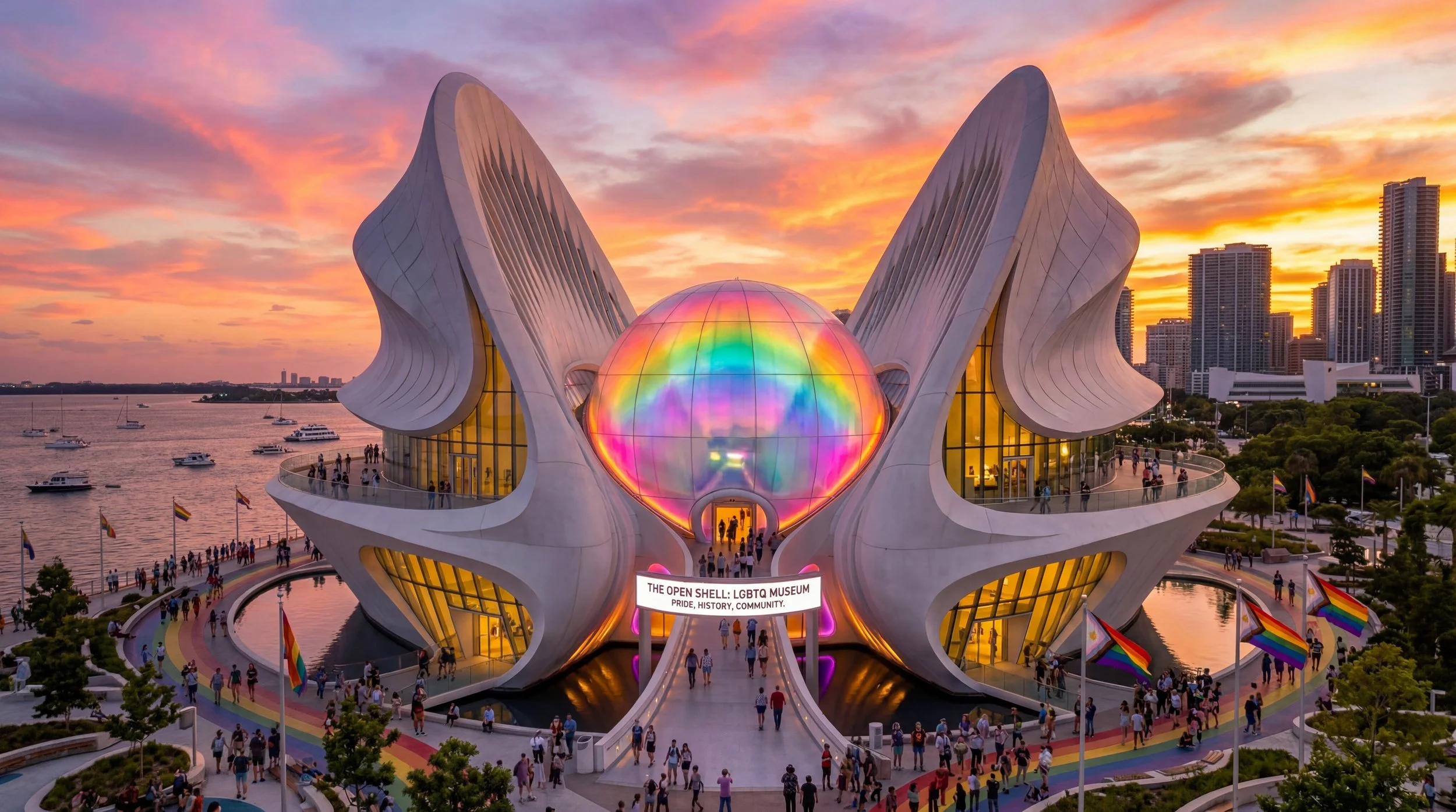
A visionary view of the LGBTQ+ Museum

Imagine a museum that celebrates visibility, resilience, and belonging.

Graduate Thesis: Pratt Institute

Written: 2003-2005 | Reimagined: 2026

This project began as a graduate thesis exploring the design of an LGBTQ+ museum, combining architectural innovation with social advocacy. Developed during a period when dedicated LGBTQ+ cultural institutions were rare, the concept envisioned complex spatial systems that guide human movement, interaction, and experience within a public environment.

In 2026, the concept has been reimagined using AI-supported visualization to explore dynamic spatial relationships, circulation patterns, and immersive experiences at multiple scales. The project demonstrates how conceptual ideas can be translated into detailed, human-centered environments that balance narrative, form, and function—highlighting abilities in spatial reasoning, iterative design, and experiential storytelling.
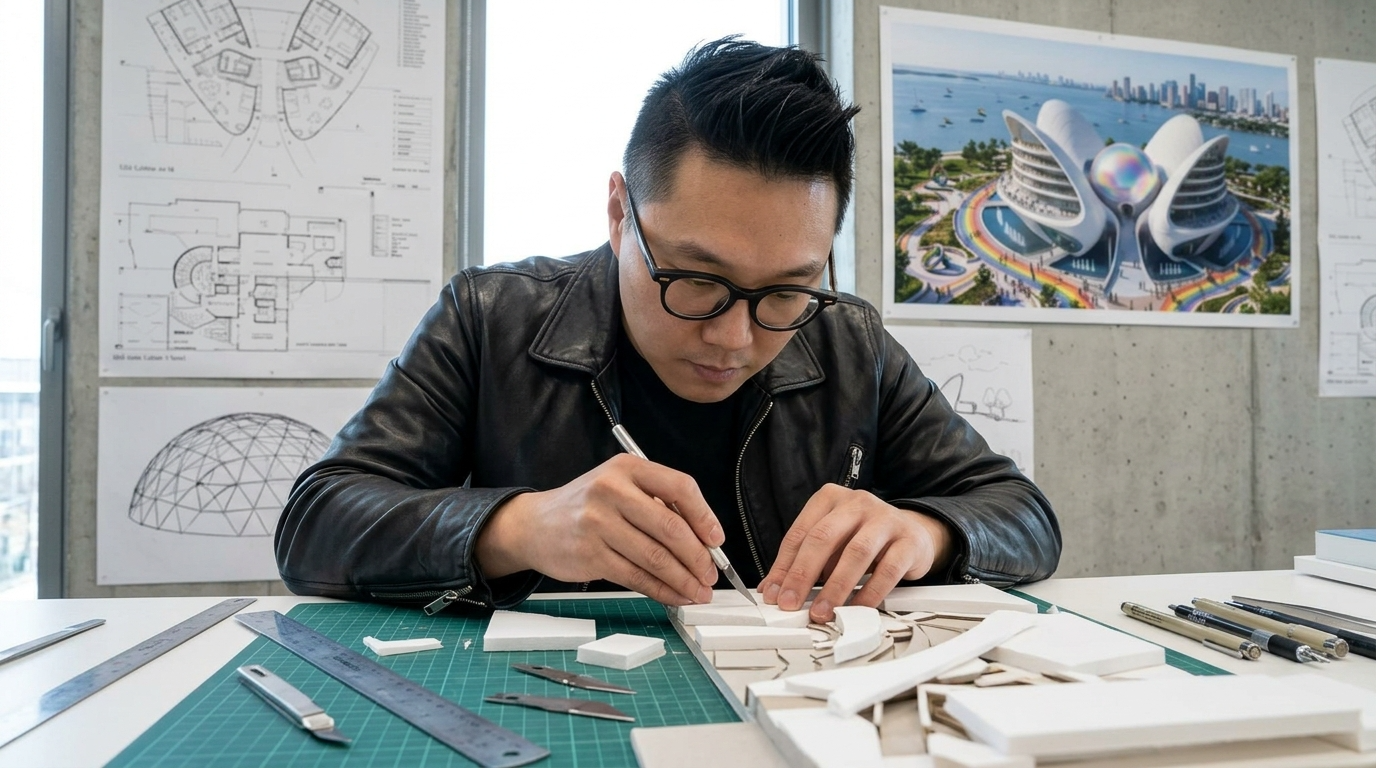
Architect working on architectural model with drawings and tools on table, in modern studio with building designs on poster boards.

Why an LGBTQ+ Museum?

Between 2003 and 2005, as a graduate student at Pratt Institute, I struggled to find spaces where LGBTQ+ identities could be fully seen, celebrated, and preserved. This experience inspired a thesis exploring the design of a museum that could honor history, foster community, and offer hope. Over 20 years later, this vision remains urgent—a place for reflection, celebration, and shared resilience for all humanity.
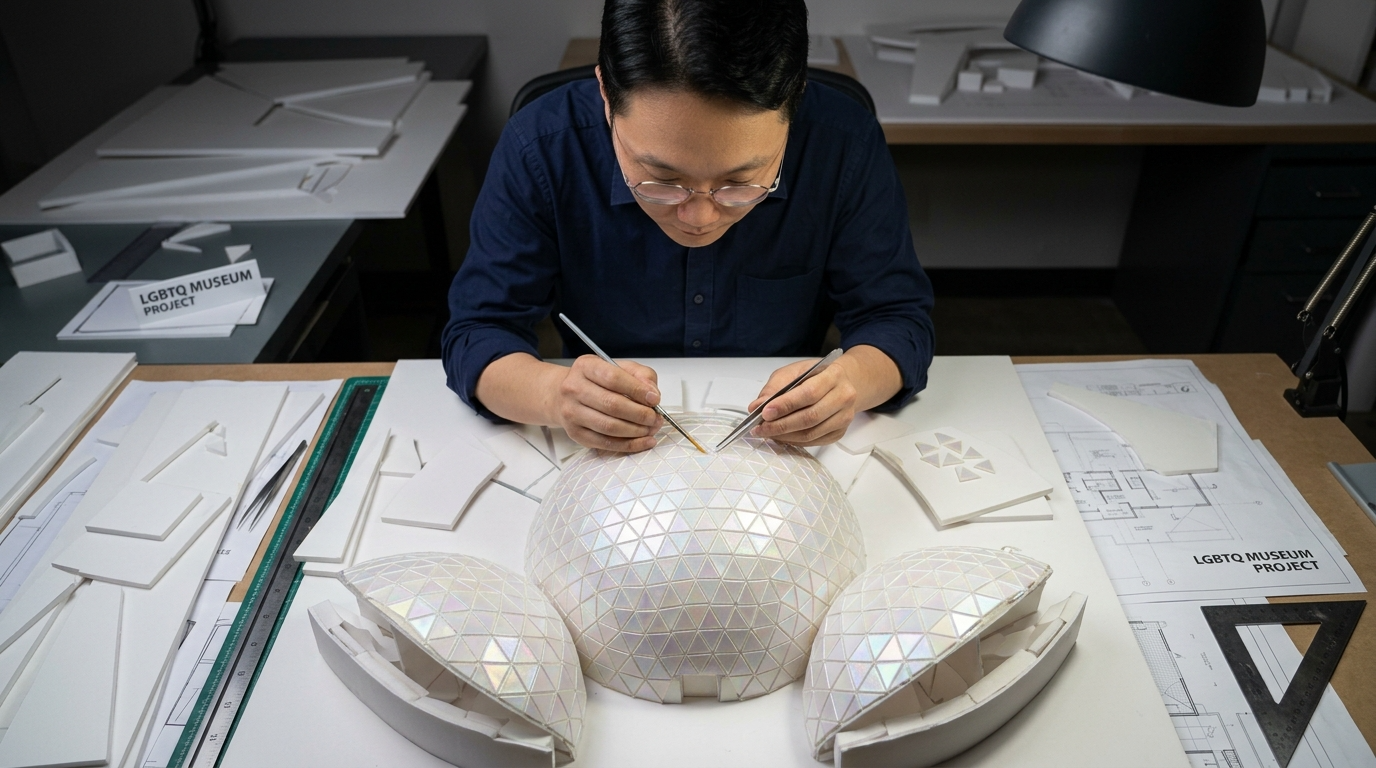
A person with glasses working on an architectural model of a geometric, lotus-shaped exhibit with a domed center and four large petals, labeled as an LGBTQ Museum Project, surrounded by plans and materials.

Concept / Vision

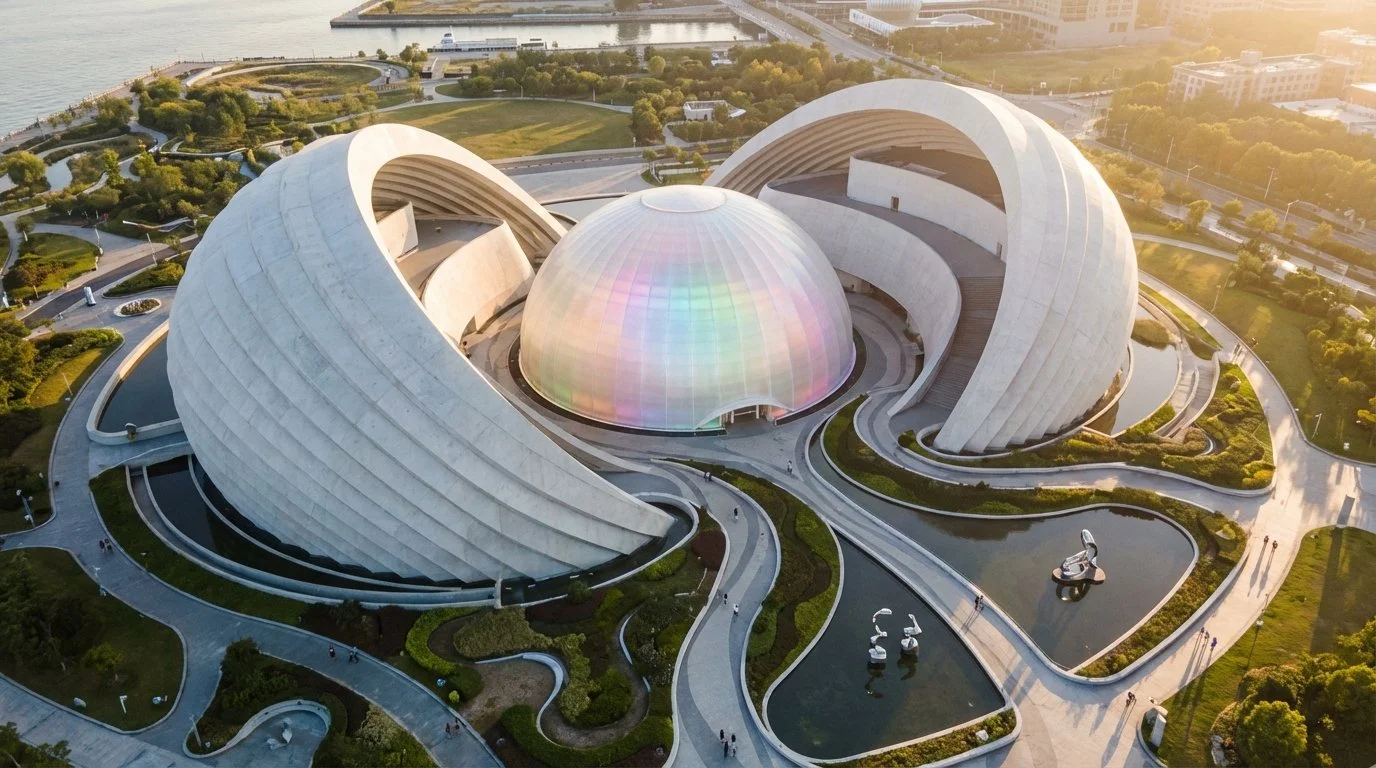
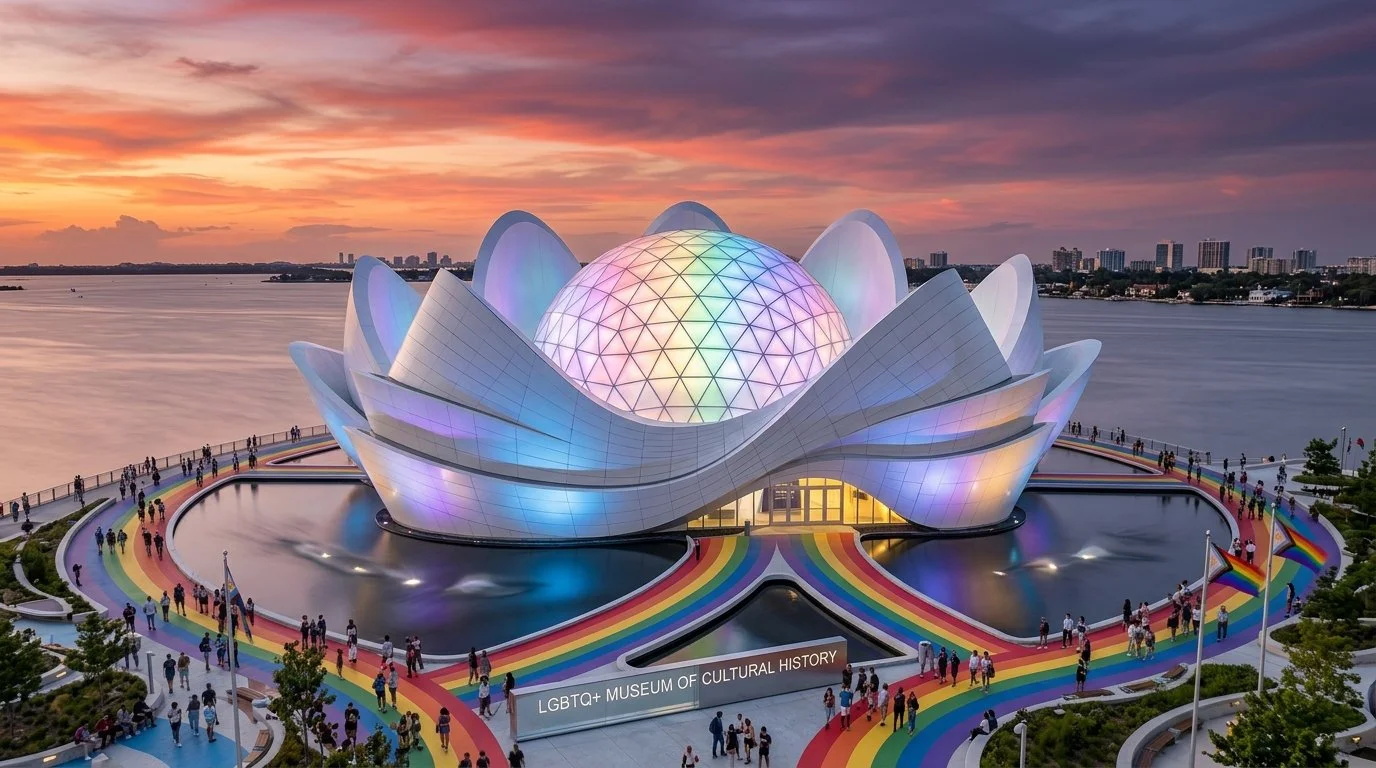
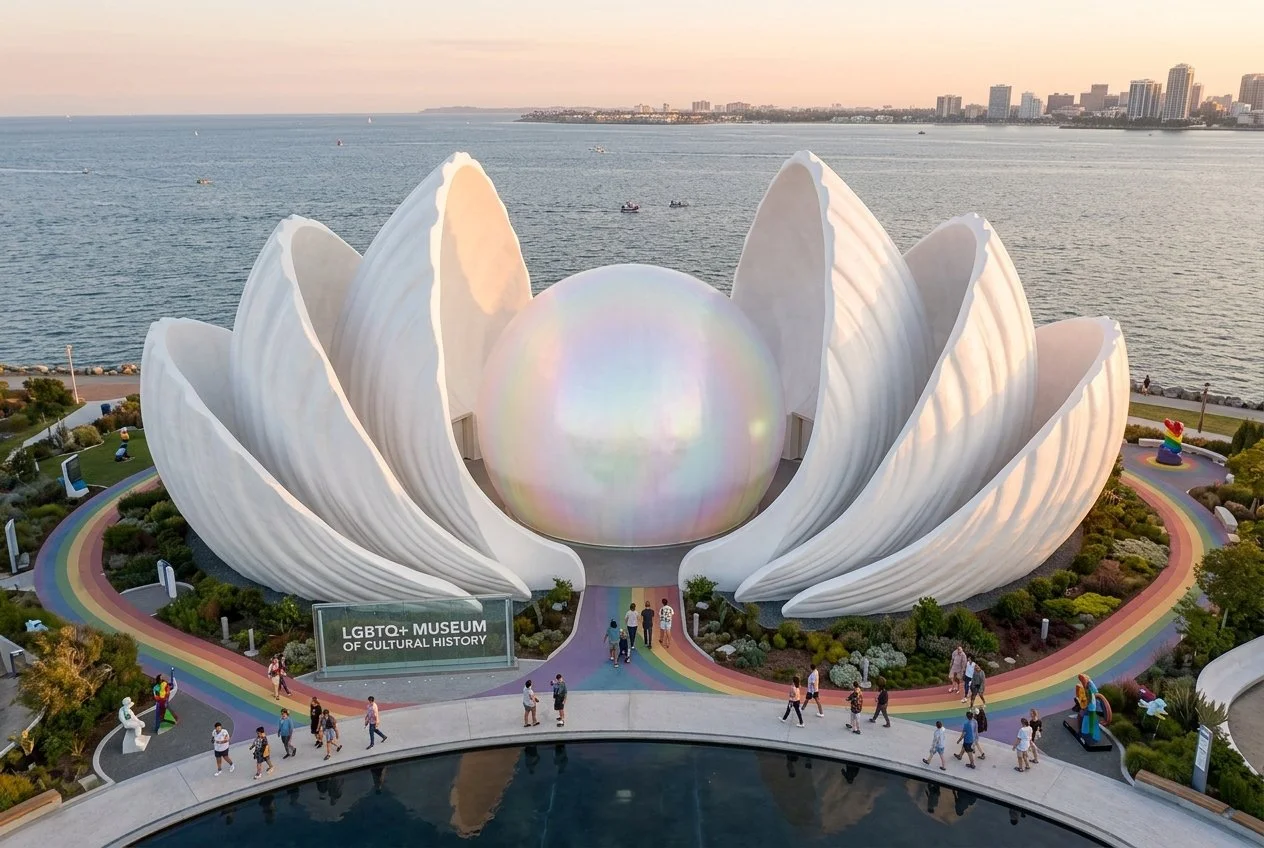
The museum takes the form of a monumental opened clam with a glowing pearl dome, a gesture of invitation, visibility, and transformation. Like a pearl forming from a grain of sand, it reflects the resilience and creativity of LGBTQ+ communities. Every curve and spatial transition guides visitors through history, culture, and celebration, creating an immersive journey of reflection and empowerment.
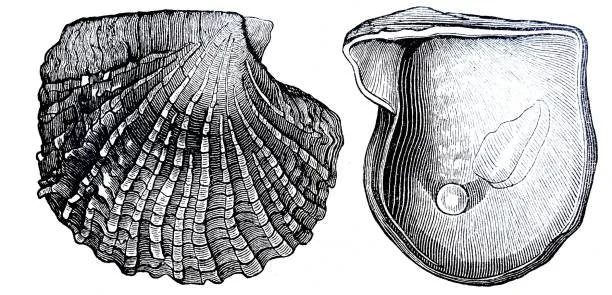
Vintage scientific illustration of a scallop shell and a clam shell.
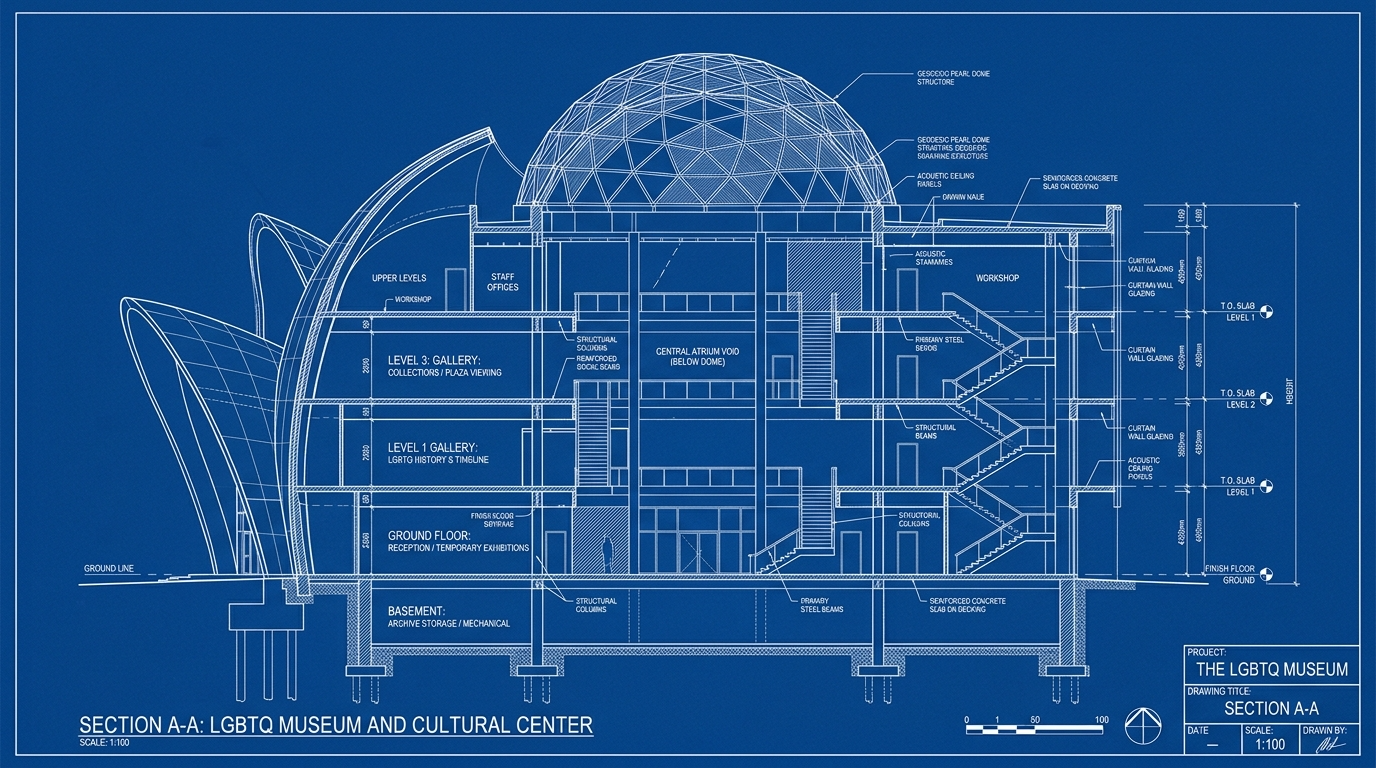
Blueprint of the LGBTQ Museum and Cultural Center, showing sections like basement, ground floor, levels 1, 2, and 3, with labels for galleries, workshops, offices, and structural elements.
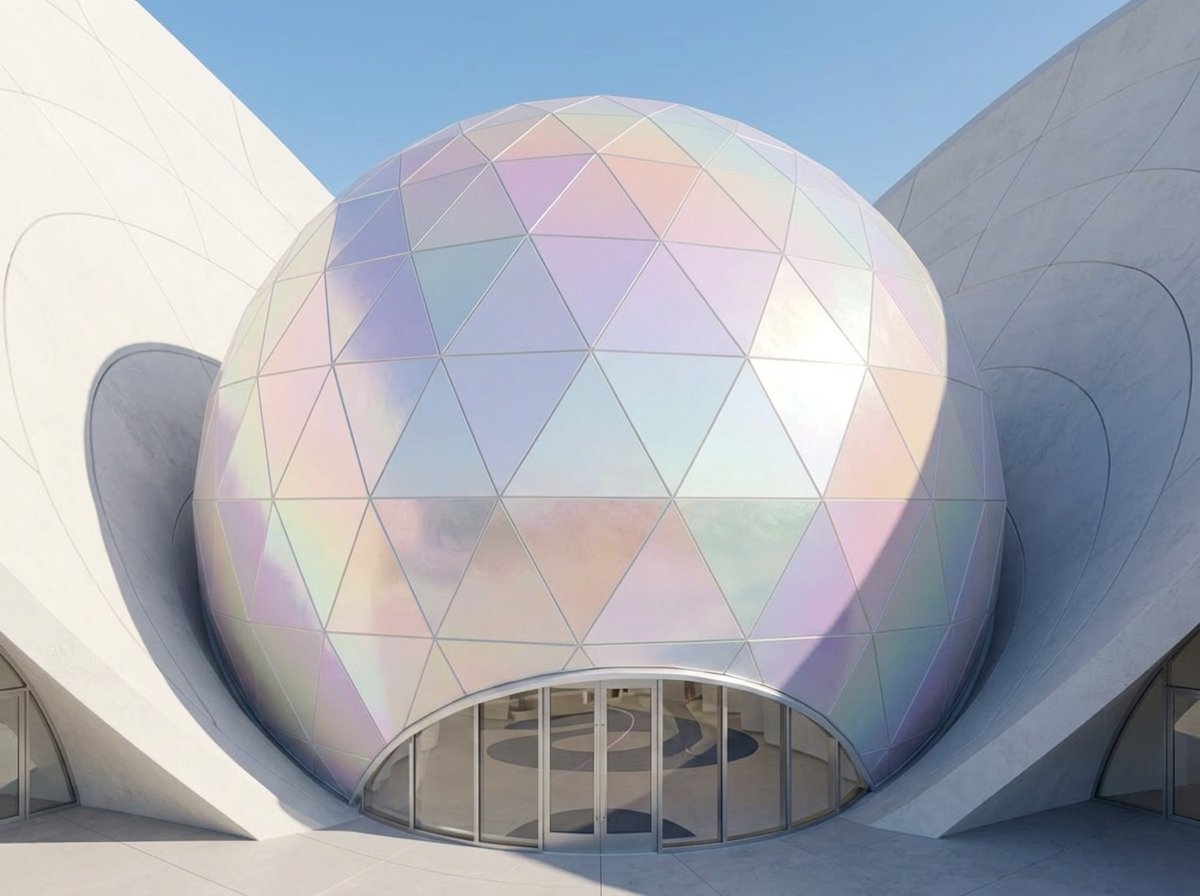
Modern building with a large iridescent geodesic dome and white curved exterior walls.
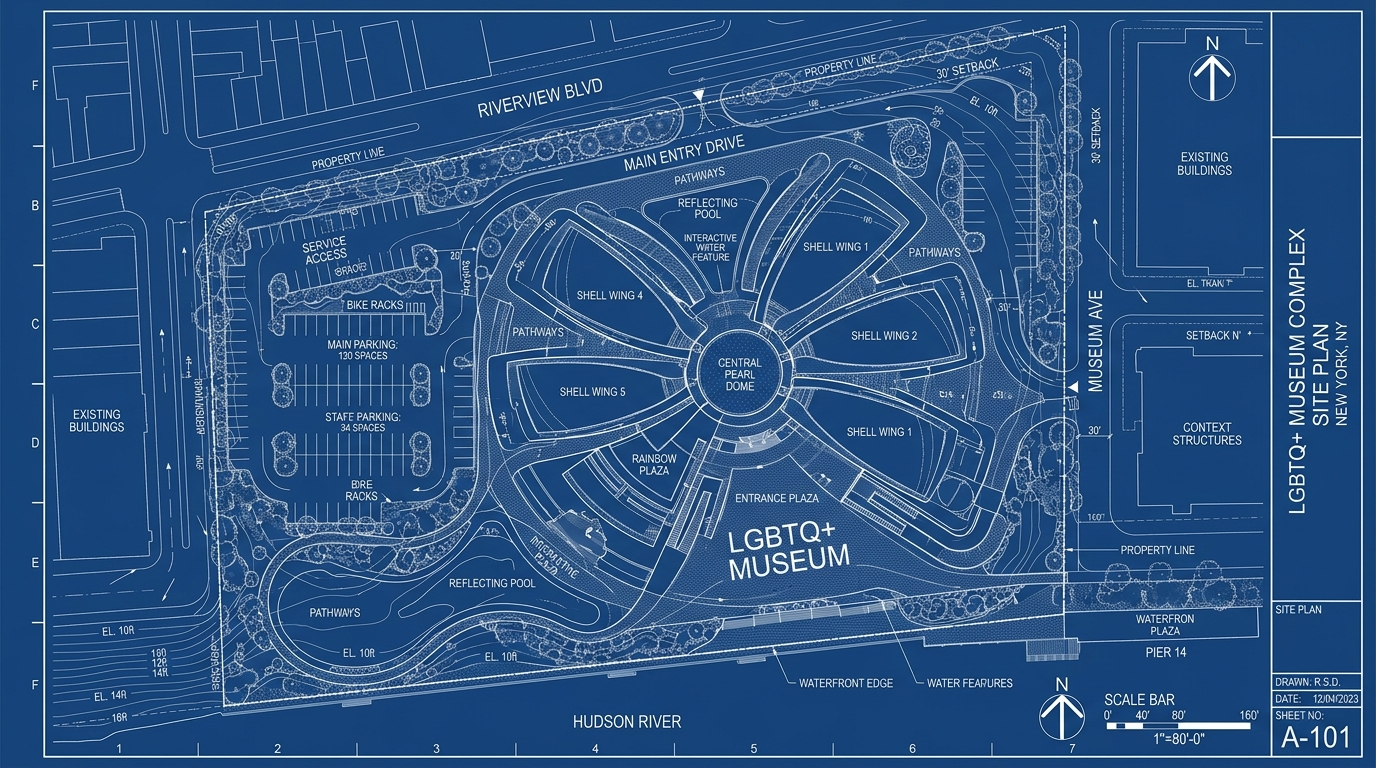
Blueprint of an LGBTQ+ museum site plan showing parking areas, pathways, central dome, building wings, reflecting pool, rainbow plaza, water features, and surrounding streets with water frontage along the Hudson River.

Exterior Architecture

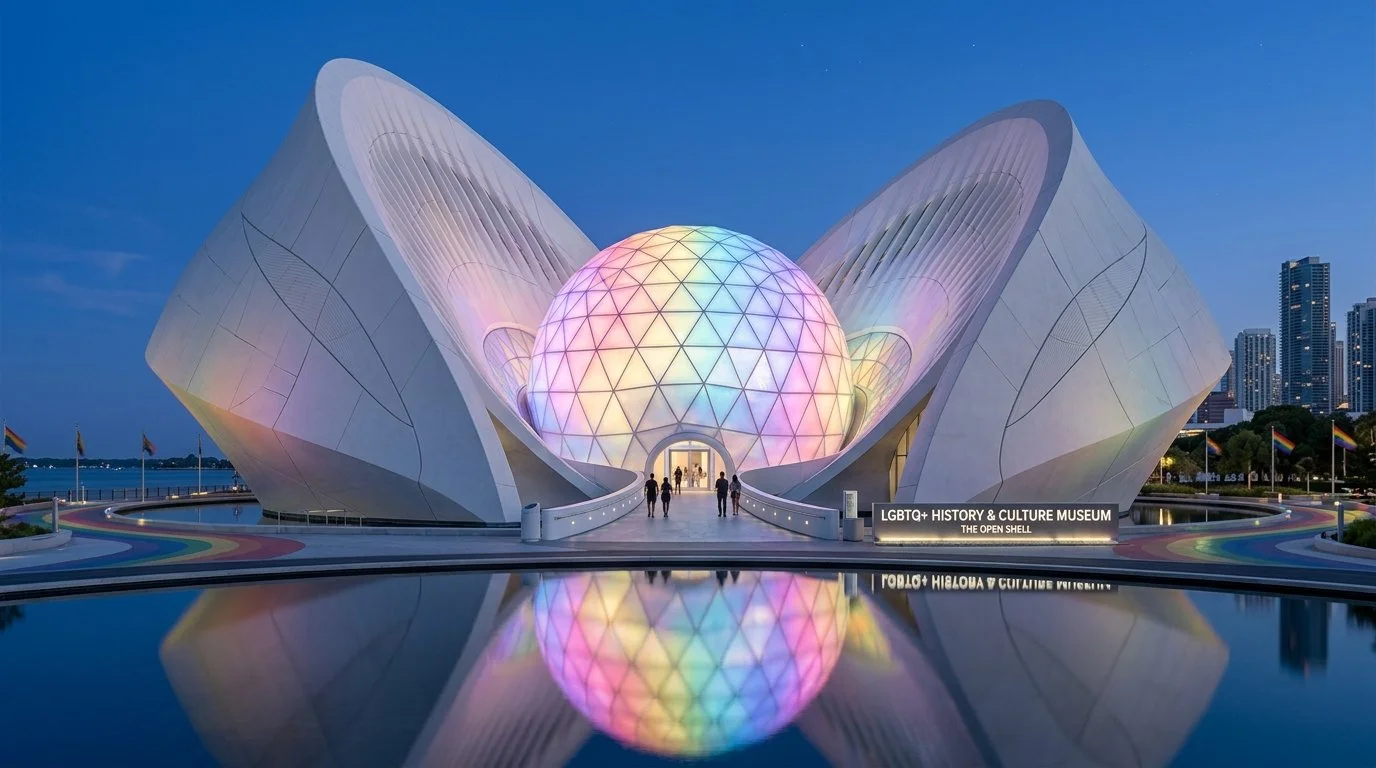
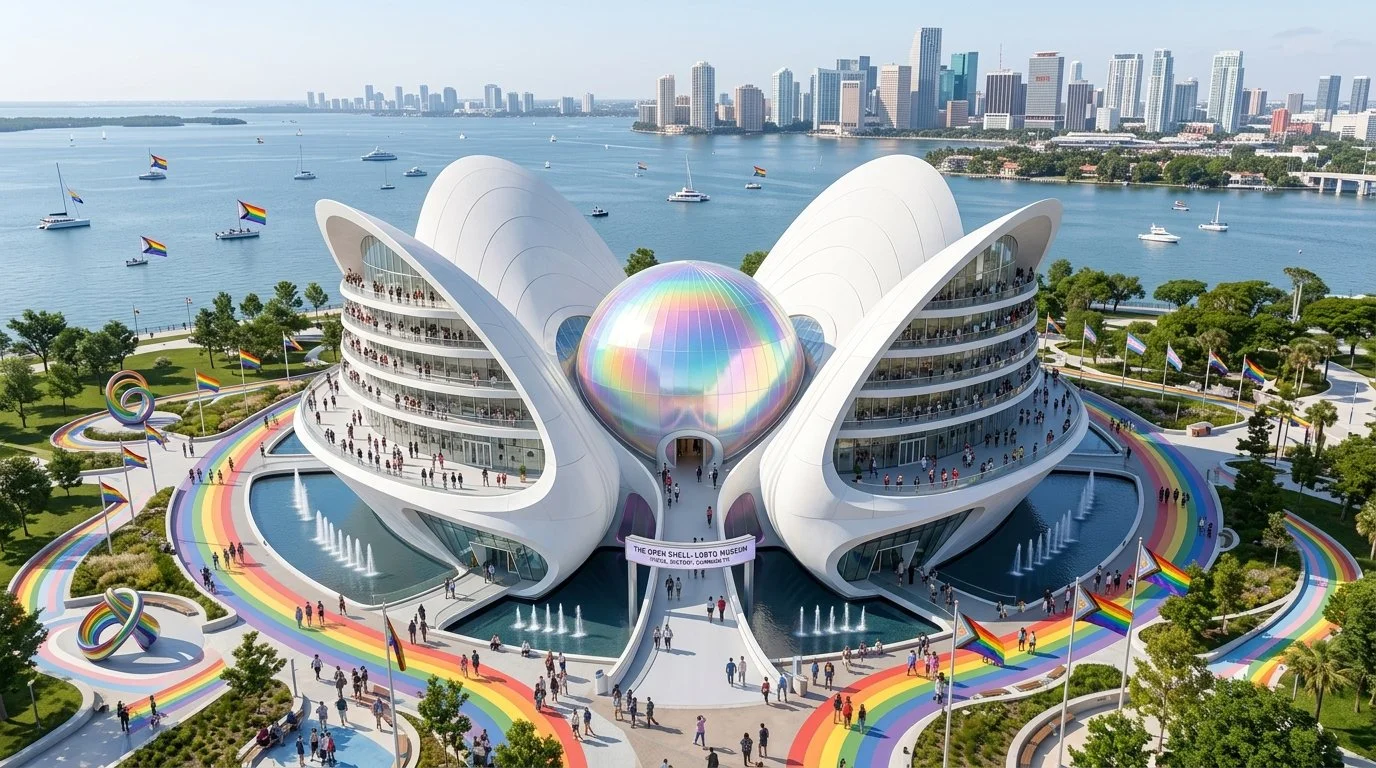
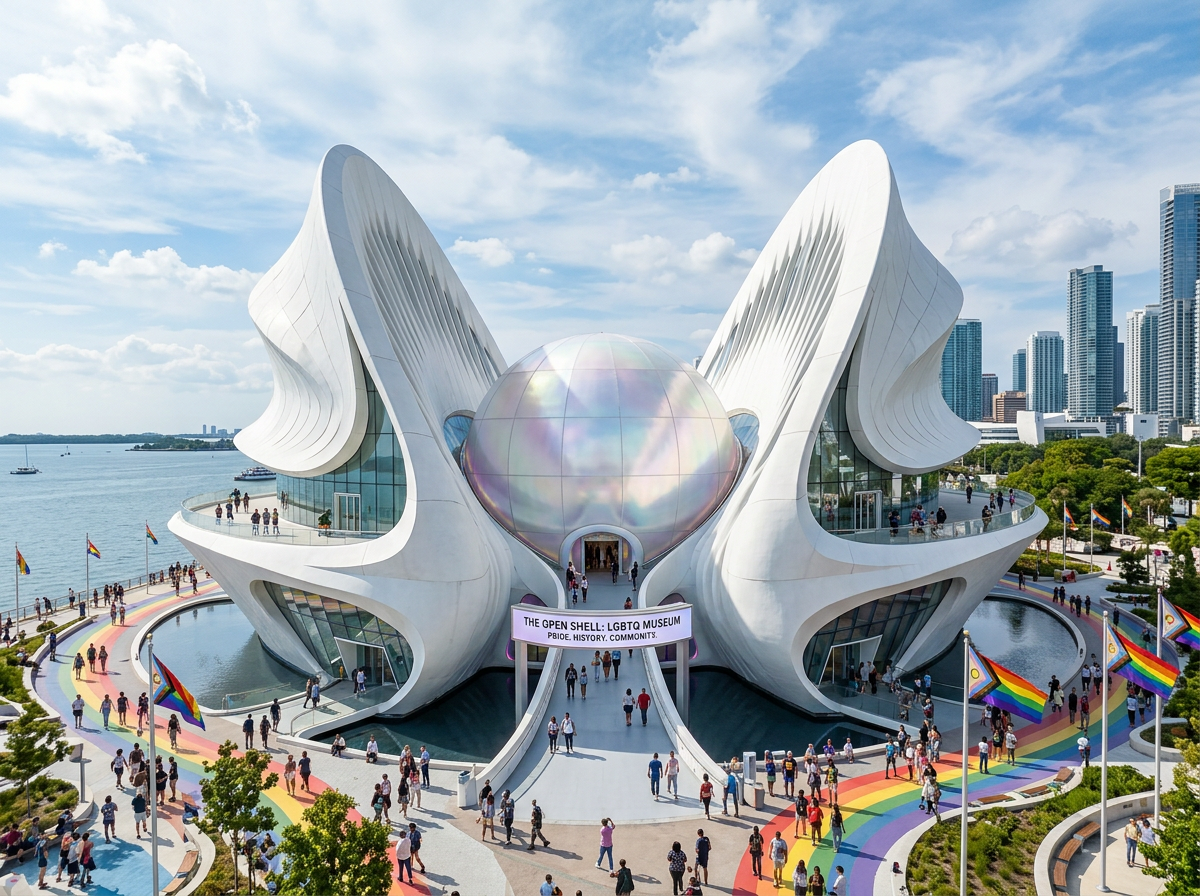
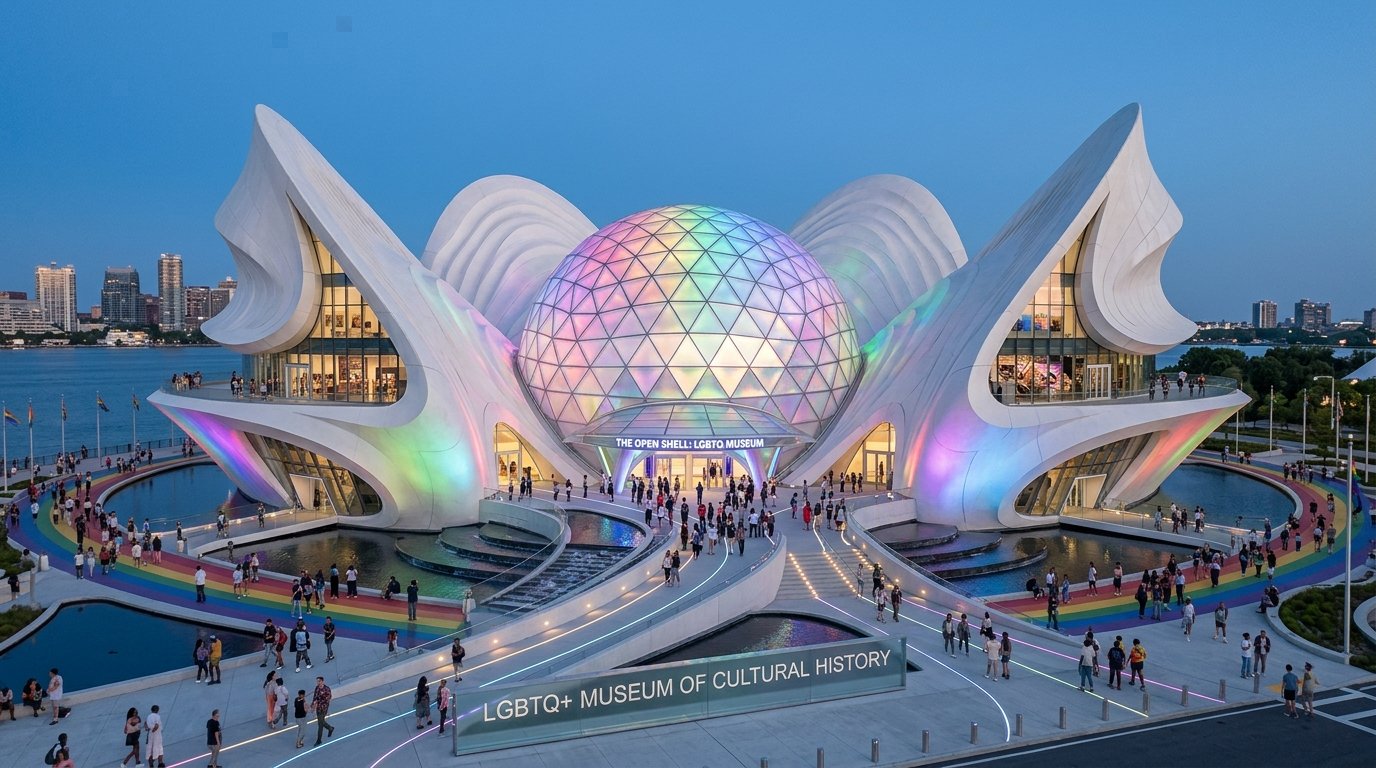
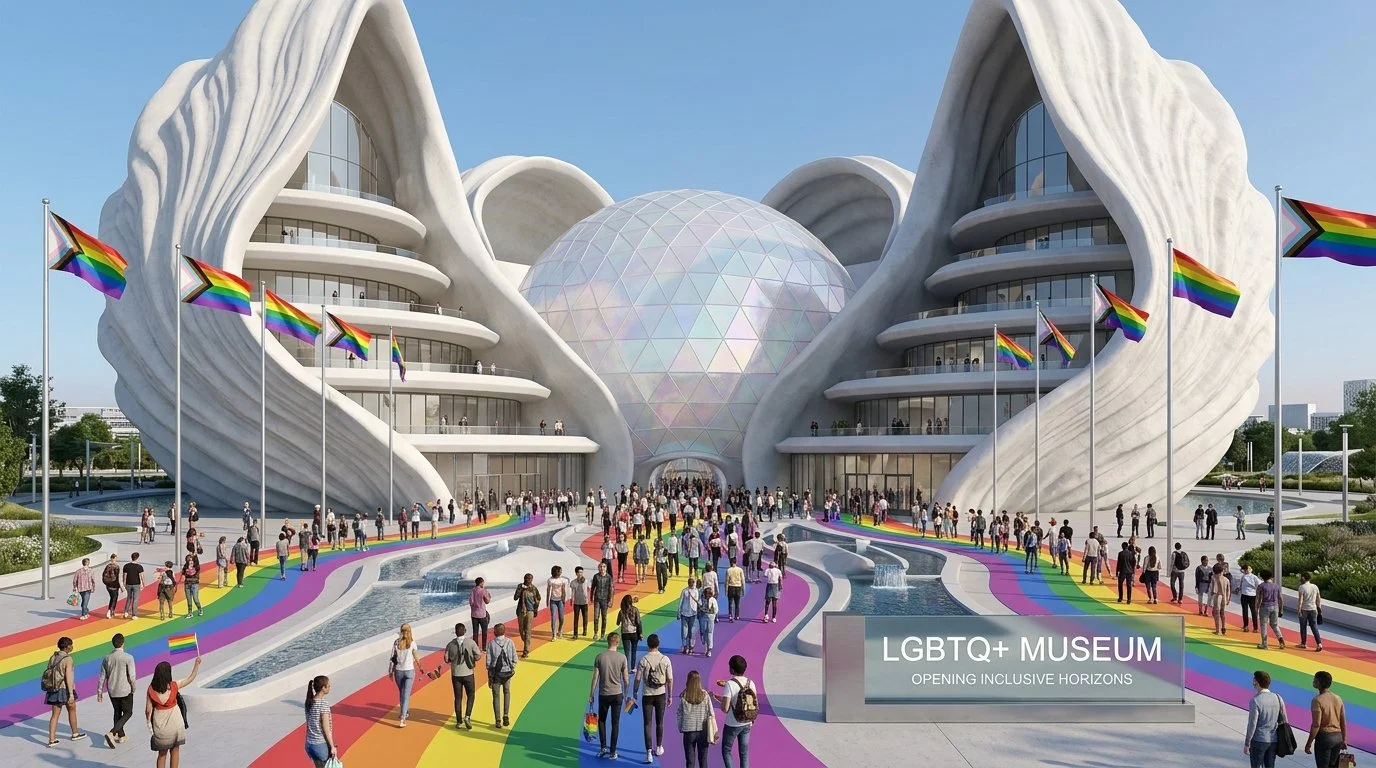
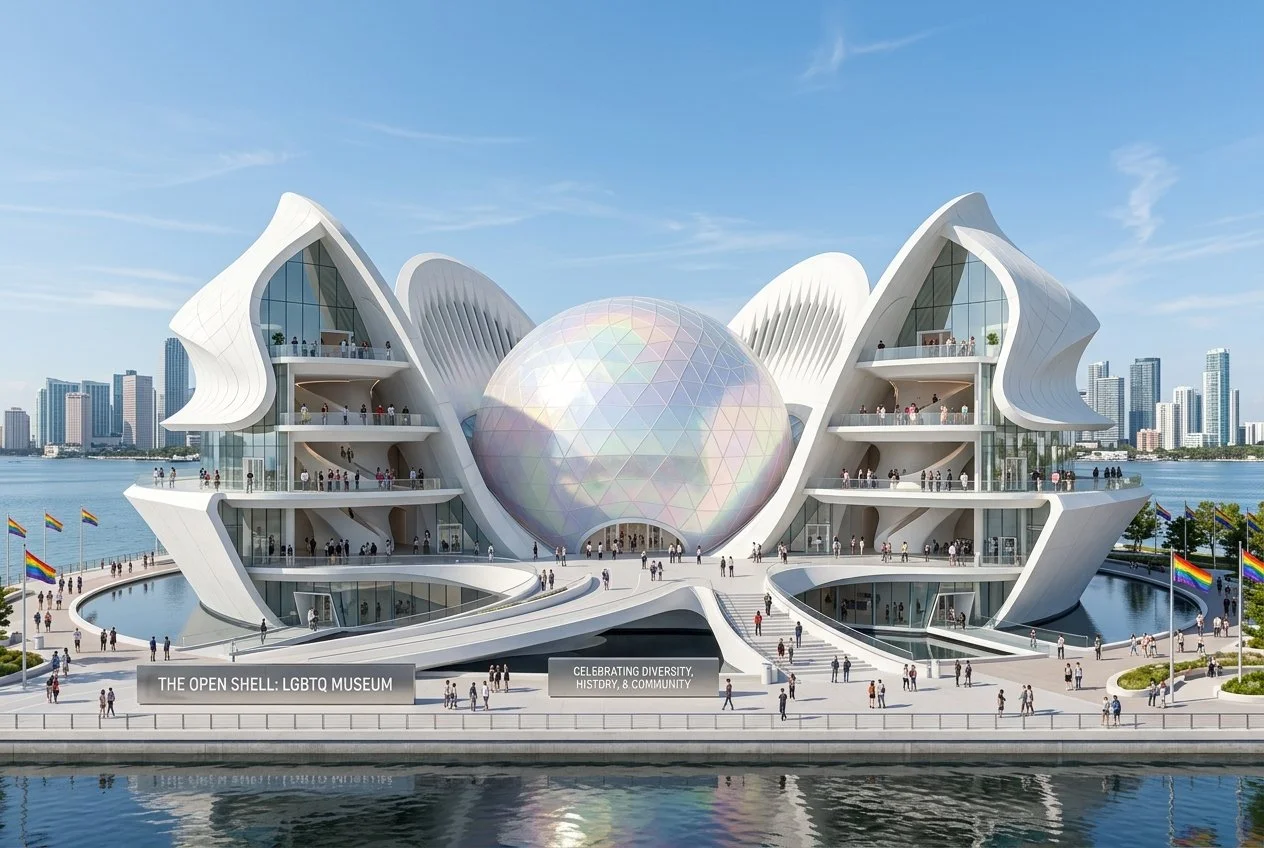
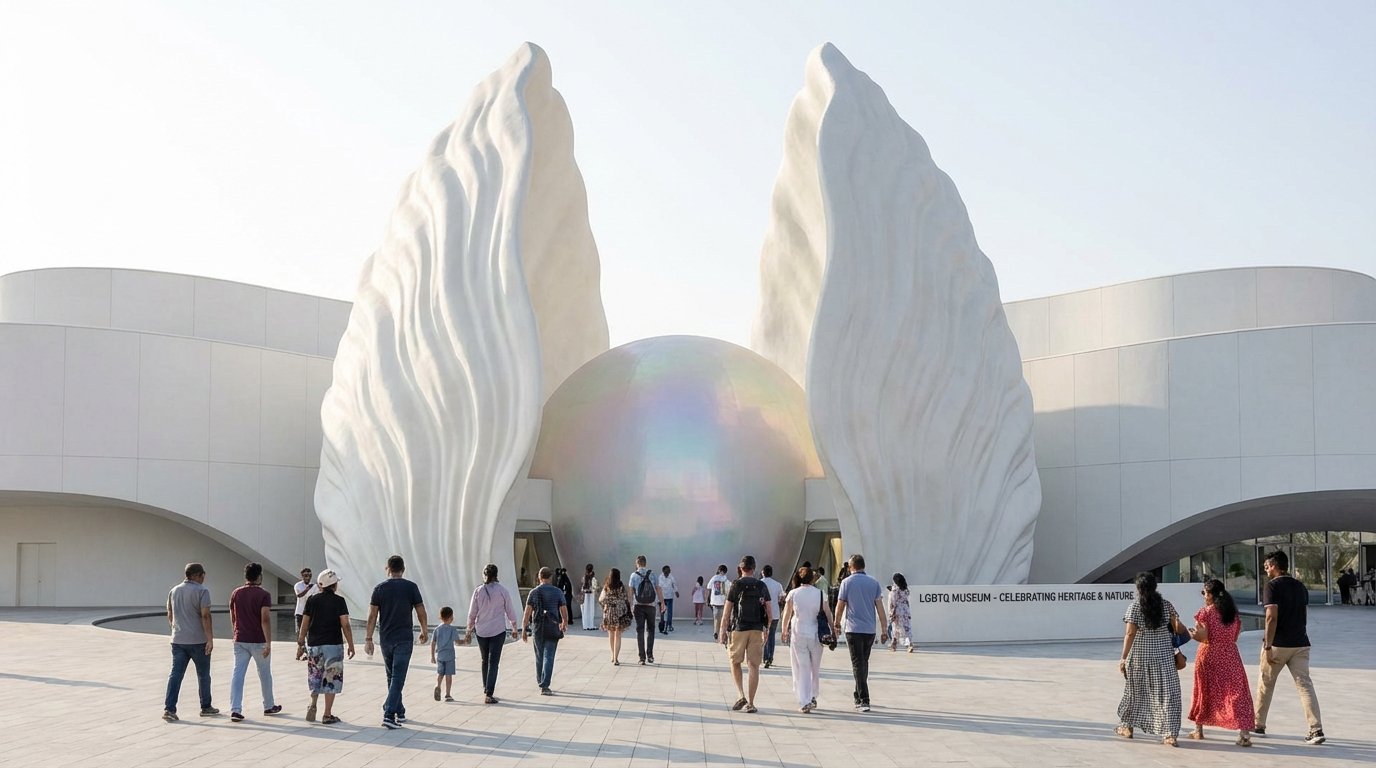
The museum’s exterior features a sculptural white facade that wraps the flowing clam-shell form, creating a sense of openness while maintaining a defined architectural presence. The central pearl dome, nestled between the shells, features a semi-translucent iridescent surface that reflects a spectrum of light, symbolizing visibility, transformation, and celebration.

Curved volumes and layered surfaces guide visitors toward the entrance while engaging the surrounding landscape, establishing a landmark presence that is both iconic and welcoming. The use of durable, high-performance materials reinforces the expressive, human-centered design intent, emphasizing clarity, light, and sculptural form.
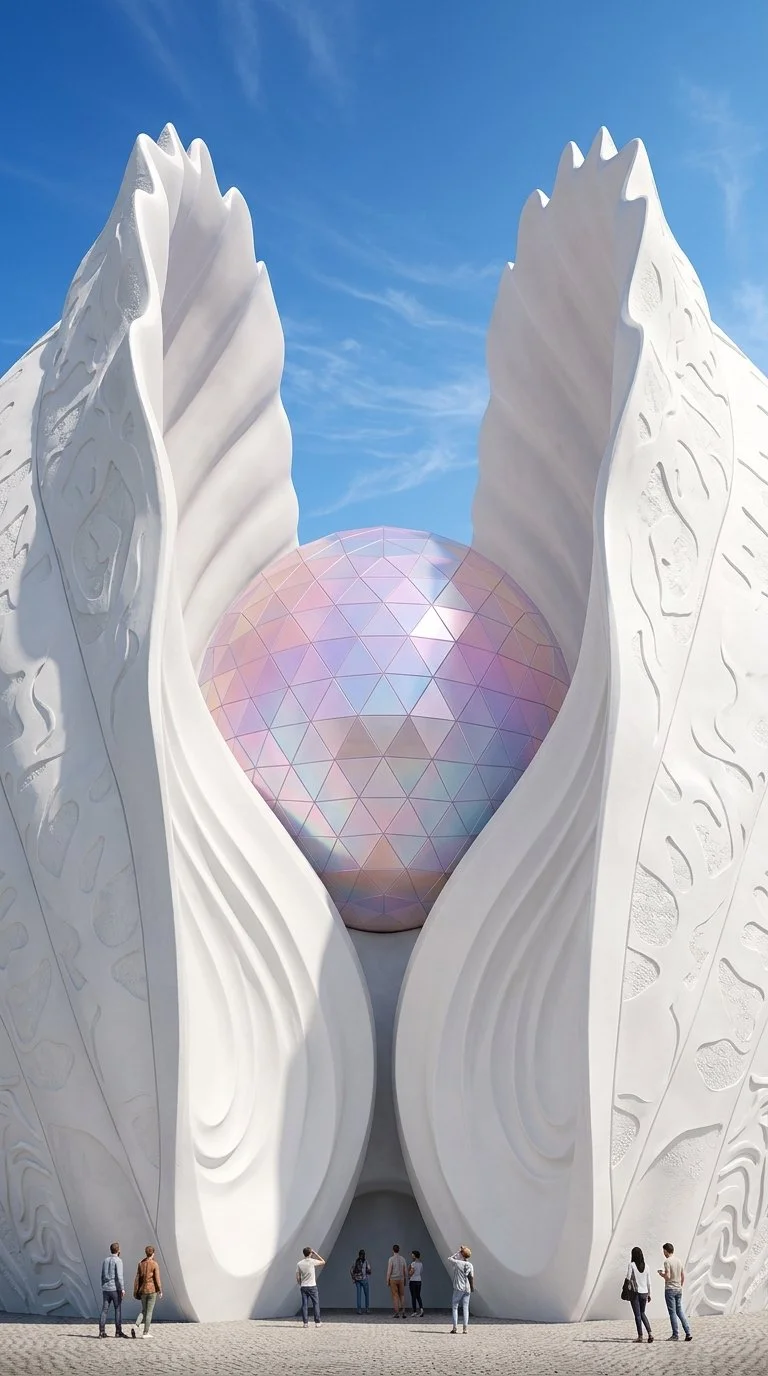
Large white sculptural structure with intricate carvings, opening like petals, with a large holographic geodesic sphere inside. Several people stand at the base for scale, against a blue sky.
People walking towards the entrance of the LGBTQ Museum, which features large white shell-shaped sculptures on either side of the doorway and a spherical metallic structure above it.
LGBTQ+ history and culture museum building with a futuristic design, illuminated with colorful lights, reflecting in a pool of water in front.
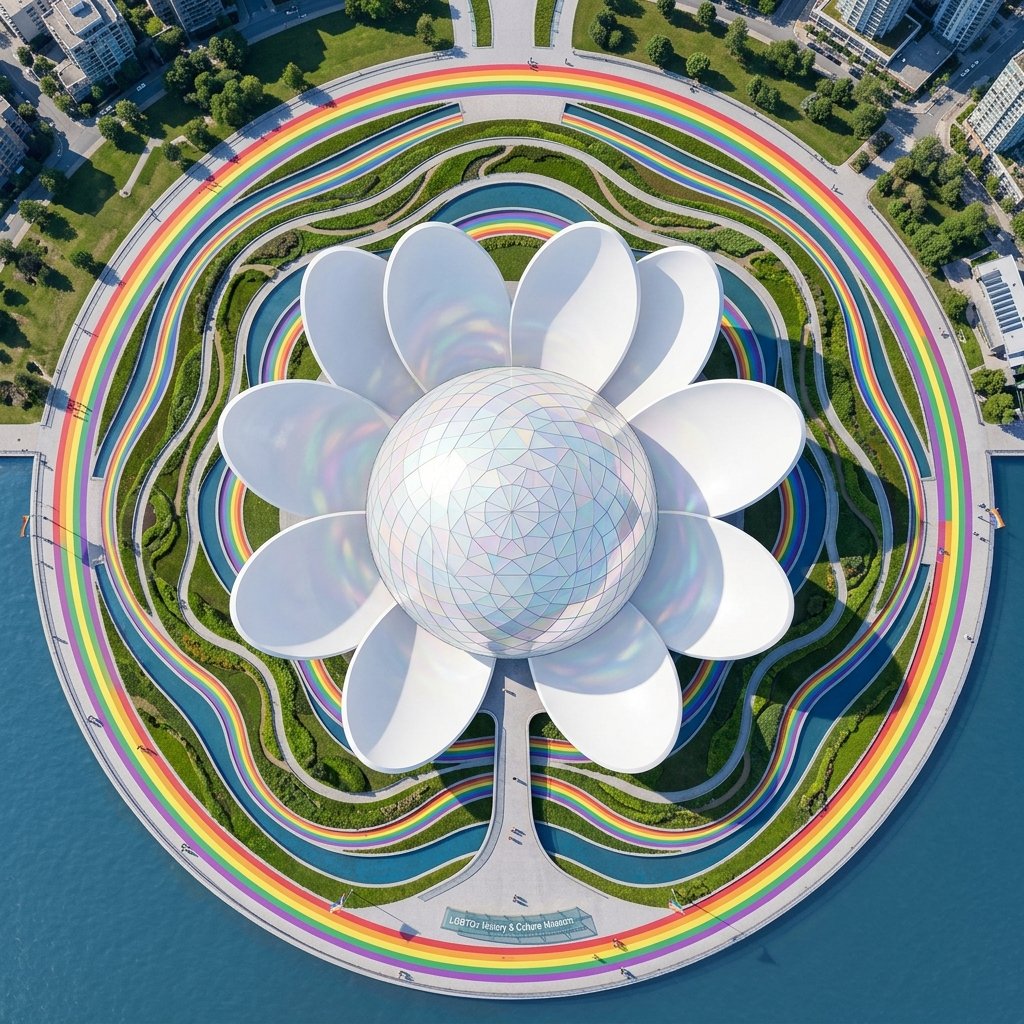
An aerial view of a modern architectural building with curved white concrete structures and a colorful dome in the center, surrounded by landscaped gardens, walkways, and water features in a park.
The LGBTQ+ Museum of Cultural History building, designed like a glowing lotus flower with rainbow-colored pathways and flags, is situated by a river during sunset with a city skyline in the background.
The LGBTQ+ Museum of Cultural History building, shaped like a large white lotus flower, is situated by a body of water with a city skyline in the background. The building features large petal-like structures surrounding a central iridescent spherical element, with a rainbow-colored pathway leading to the entrance, and people walking around.
Futuristic building shaped like butterfly wings with a rainbow-colored glass sphere in the center, surrounded by rainbow pathways, flags, and a city skyline with water in the background.
The Oppen Shell at the LGBTQ Museum features a modern, white, shell-like structure with a large iridescent globe in the center. The building is surrounded by a rainbow pathway and flags, with many people walking around the area under a partly cloudy sky, and a city skyline in the background.
Exterior view of the LGBTQ+ Museum of Cultural History, a modern building with curving white structures and a large iridescent geodesic sphere at the entrance, with people walking around and city skyline in the background.
A large building with an abstract, flowing design features rainbow flags and rainbow-colored pathways leading to it. The building has multiple balconies and a spherical glass structure at the center. People are walking toward the entrance. A sign reads, 'LGBTQ+ MUSEUM - OPENING INCLUSIVE HORIZONS'.
Futuristic LGBTQ Museum with a large iridescent sphere at the center, surrounded by architectural structures resembling open shells, located on a waterfront with people walking and a city skyline in the background.
Aerial view of a modern building designed like a white flower with a large, spherical, glass center, surrounded by colorful rainbow-striped pathways and green landscaping, located near water.

Why an LGBTQ+ Museum Matters

A museum has the unique ability to translate complex histories and lived experiences into accessible, shared understanding. By presenting LGBTQ+ stories through art, design, science, and culture, it offers the general public a space to engage with these narratives in a positive, educational, and human-centered way.

Group of people holding a rainbow pride flag outdoors during sunset.

LGBTQ+ teens face disproportionate risks worldwide… Up to 70% experience bullying or harassment at school or online. They are 3–5 times more likely to attempt suicide than their peers. Many are rejected by families or forced into homelessness. Safe, affirming spaces and community support can be life-saving. We must create environments where LGBTQ+ youth are seen, celebrated, and protected.
LGBTQ+ teens face disproportionate risks worldwide… Up to 70% experience bullying or harassment at school or online. They are 3–5 times more likely to attempt suicide than their peers. Many are rejected by families or forced into homelessness. Safe, affirming spaces and community support can be life-saving. We must create environments where LGBTQ+ youth are seen, celebrated, and protected.

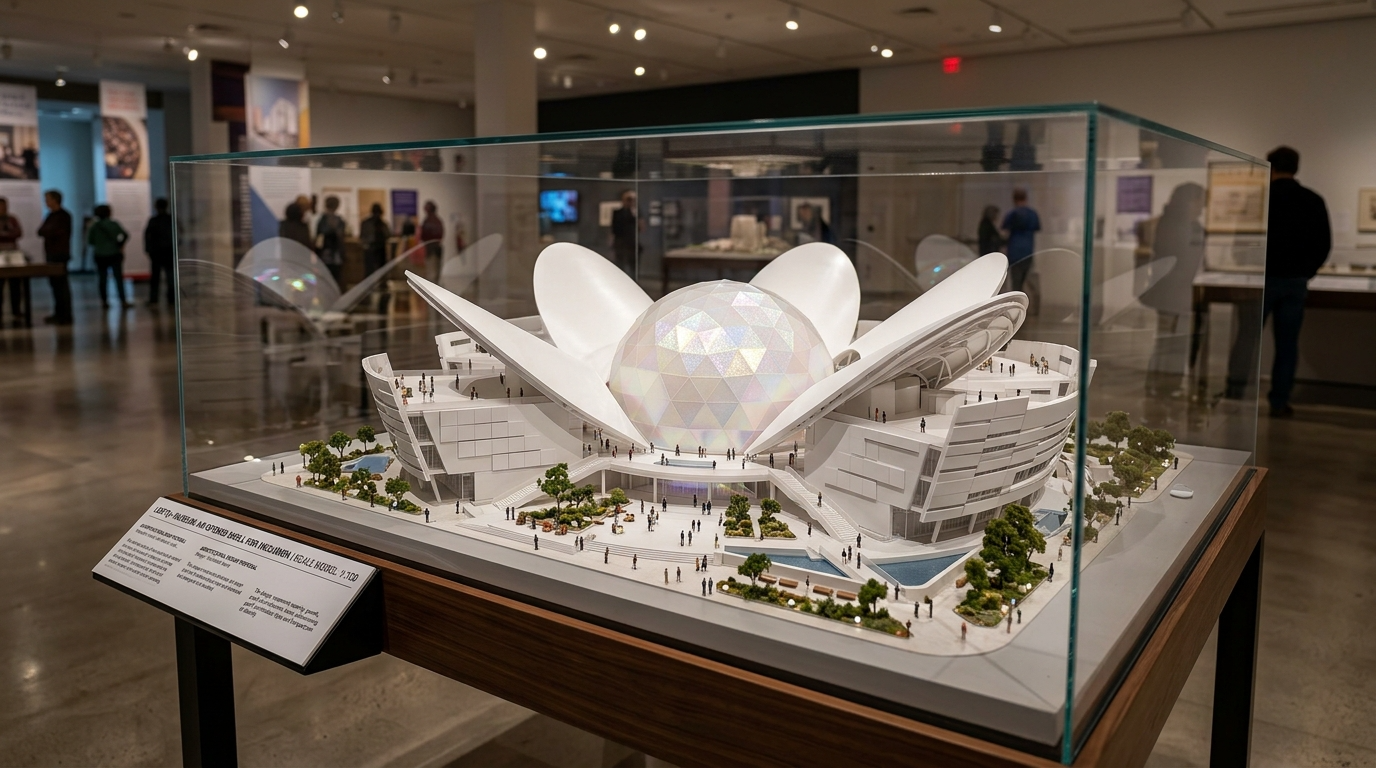
Architectural model of a modern building with a large spherical structure and petal-like features displayed in a glass case at an exhibition.

Impact on Youth and Education

A museum has the unique ability to translate complex histories and lived experiences into accessible, shared understanding. By presenting LGBTQ+ stories through art, design, science, and culture, it offers the general public a space to engage with these narratives in a positive, educational, and human-centered way.

Interior Spaces & Program

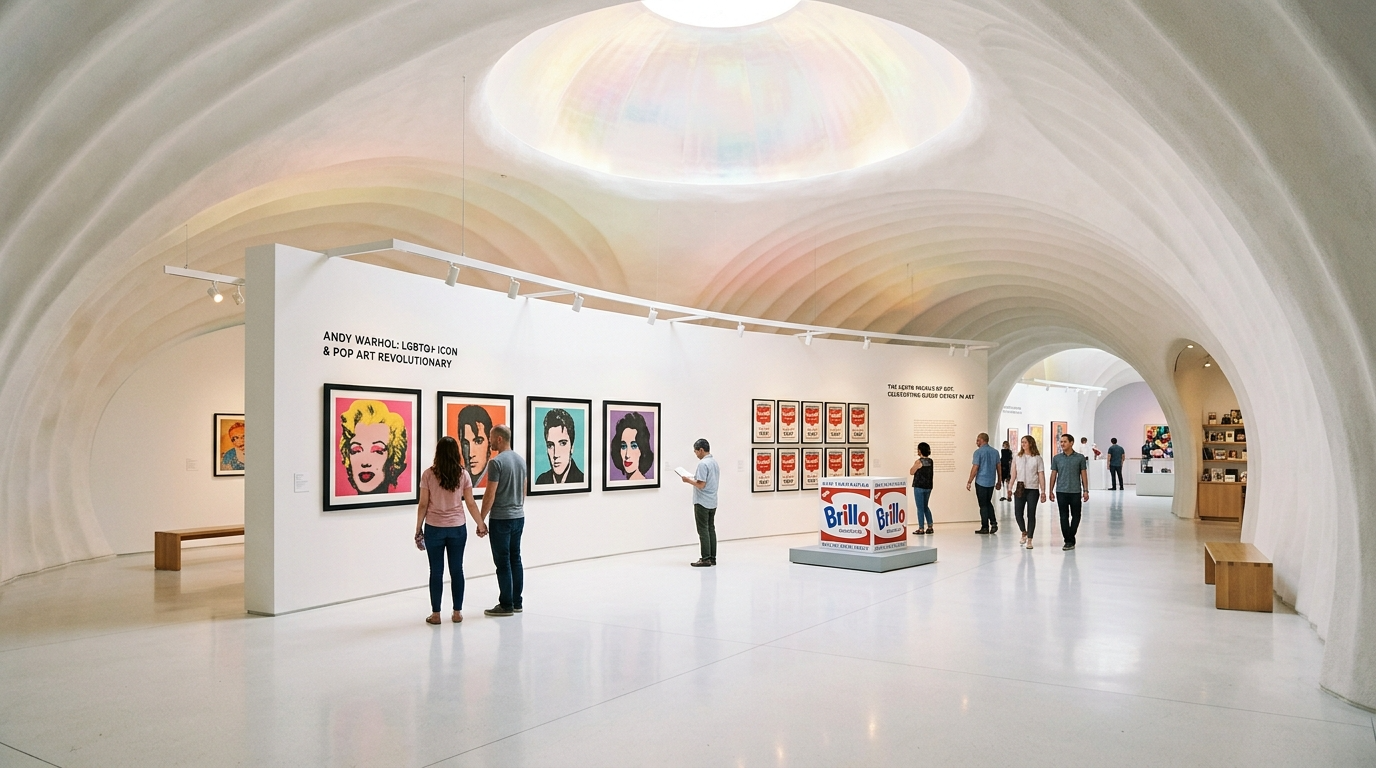
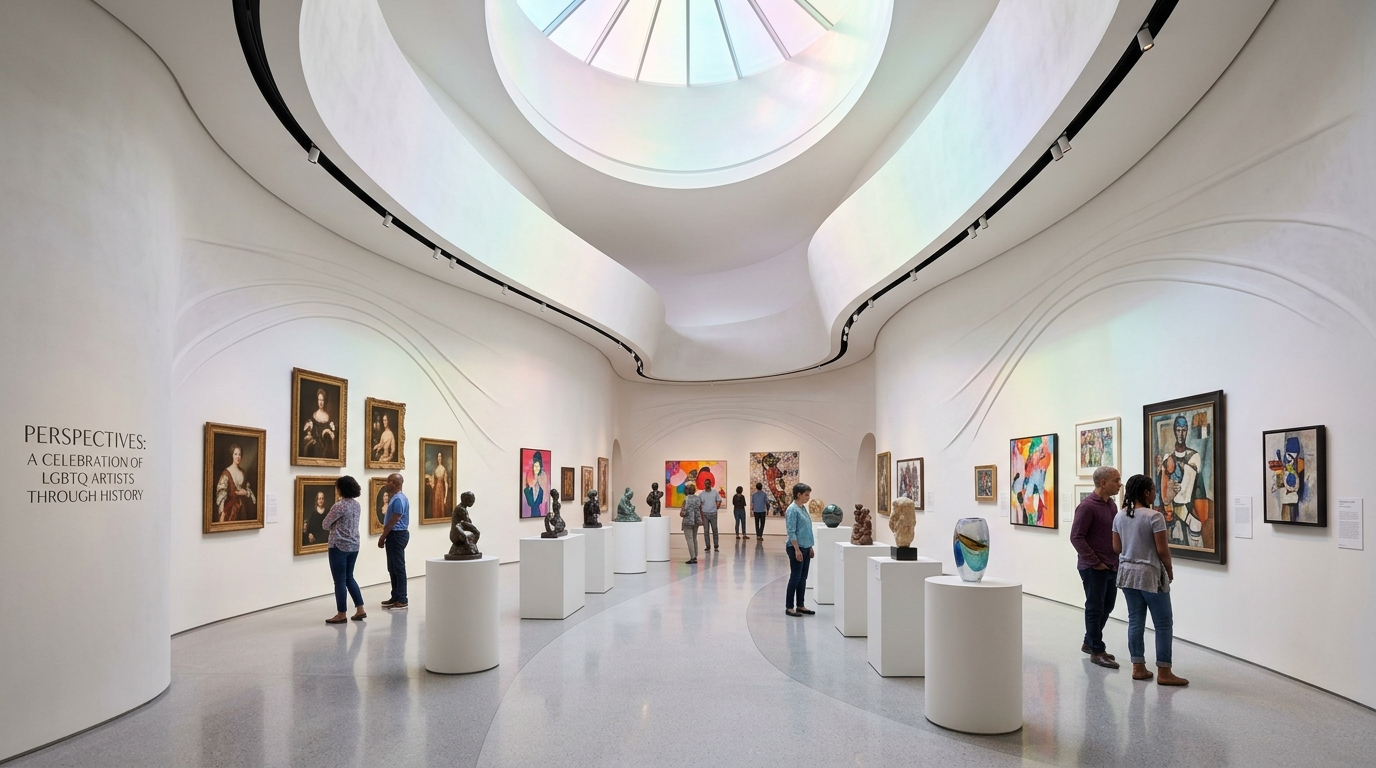
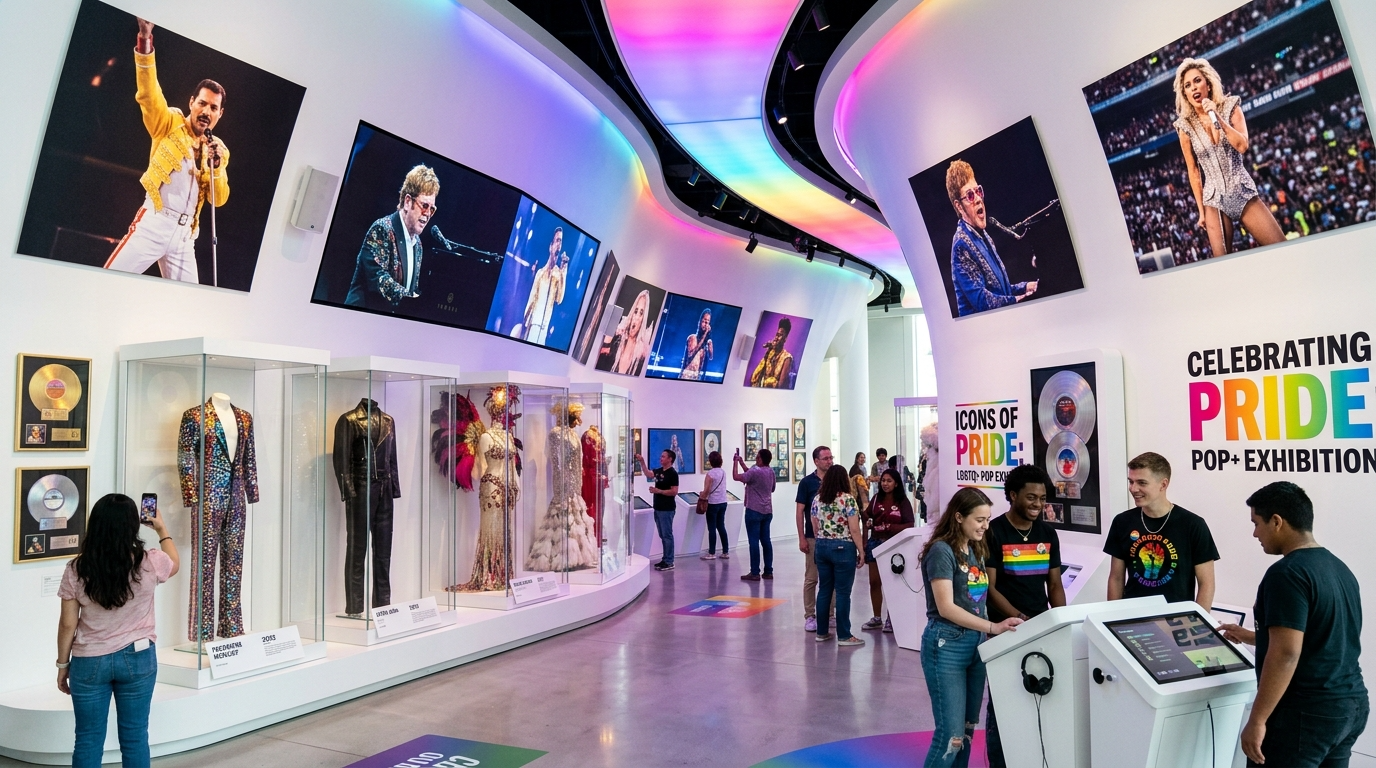
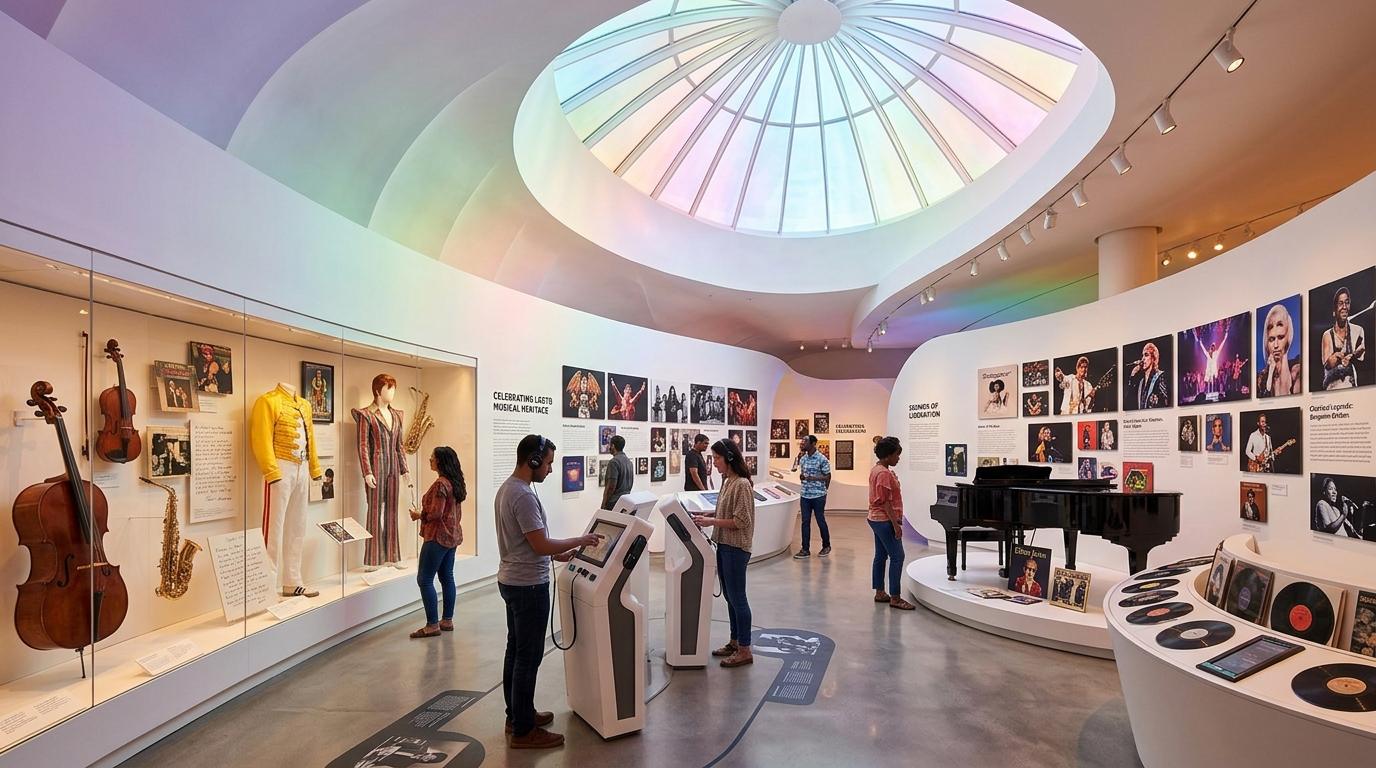
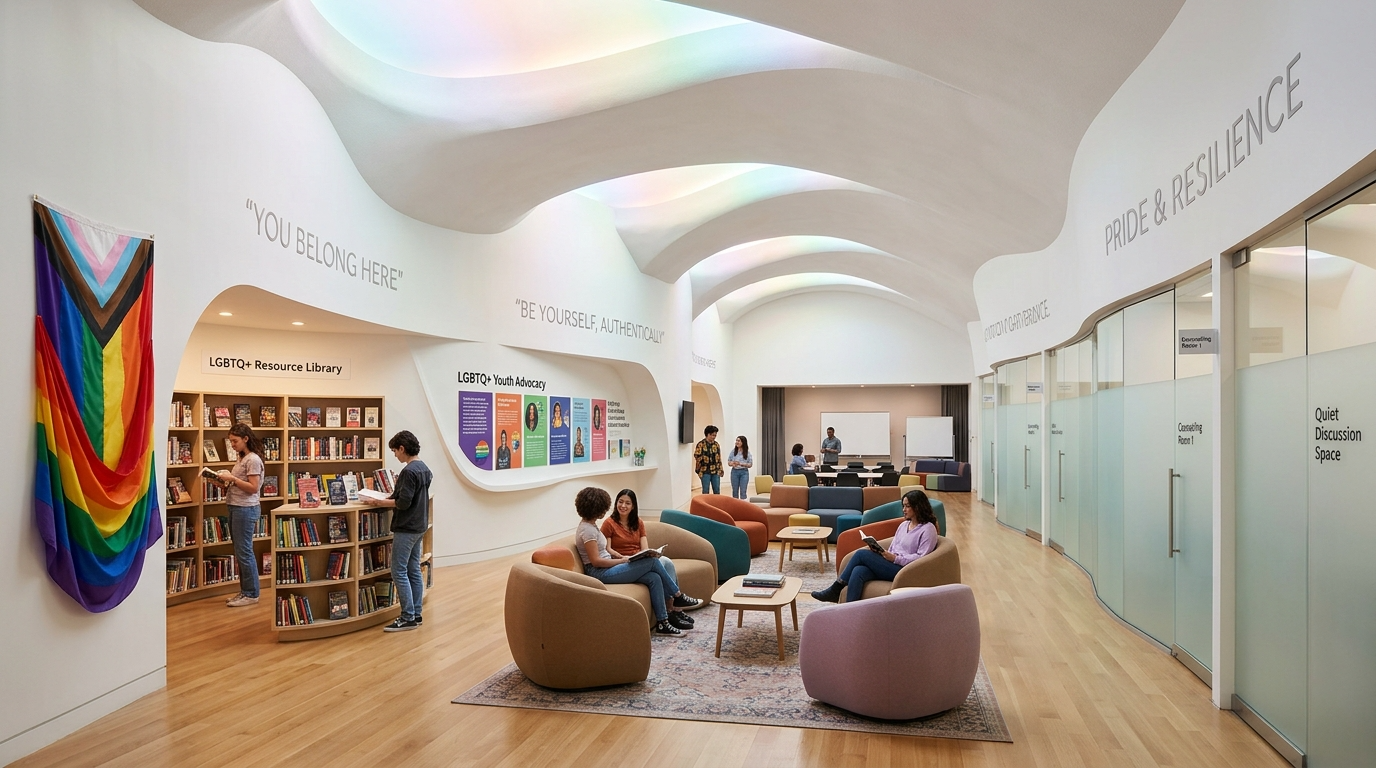
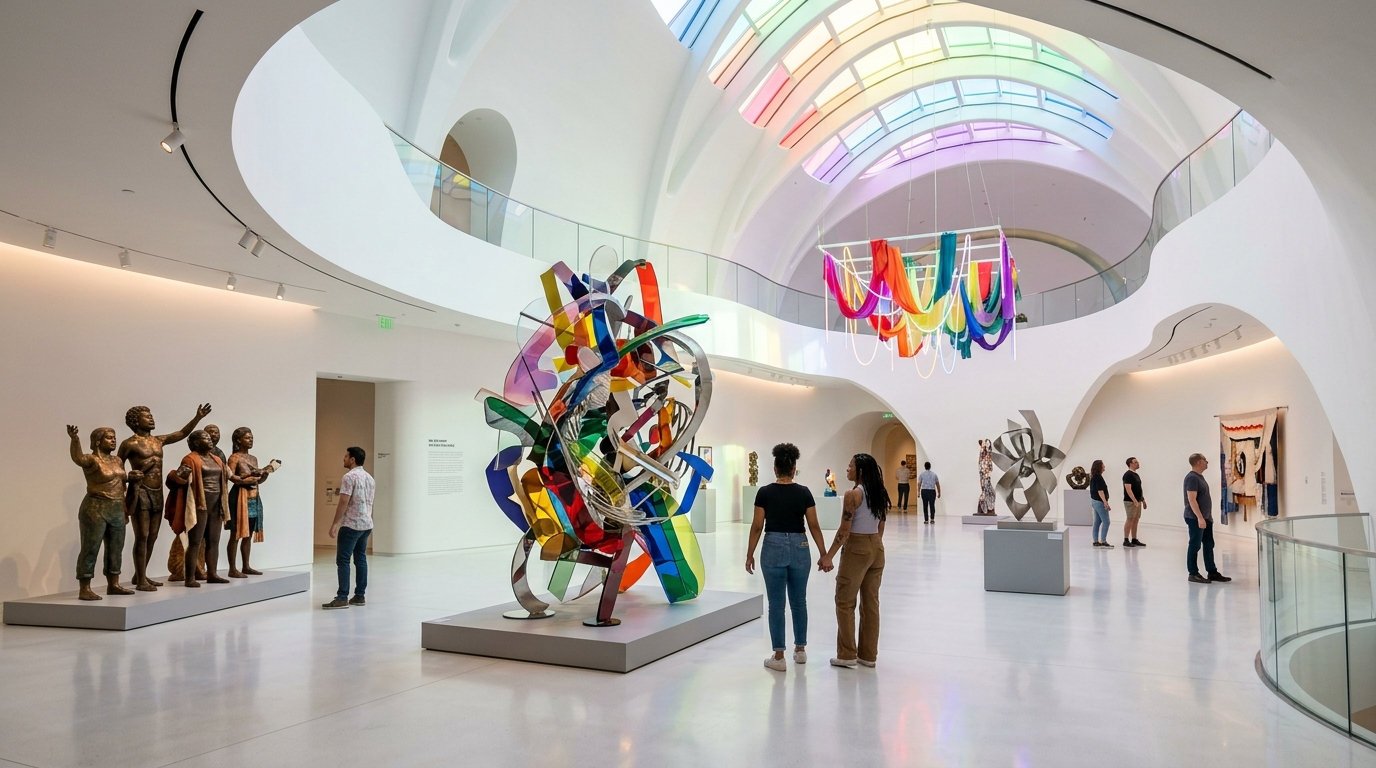
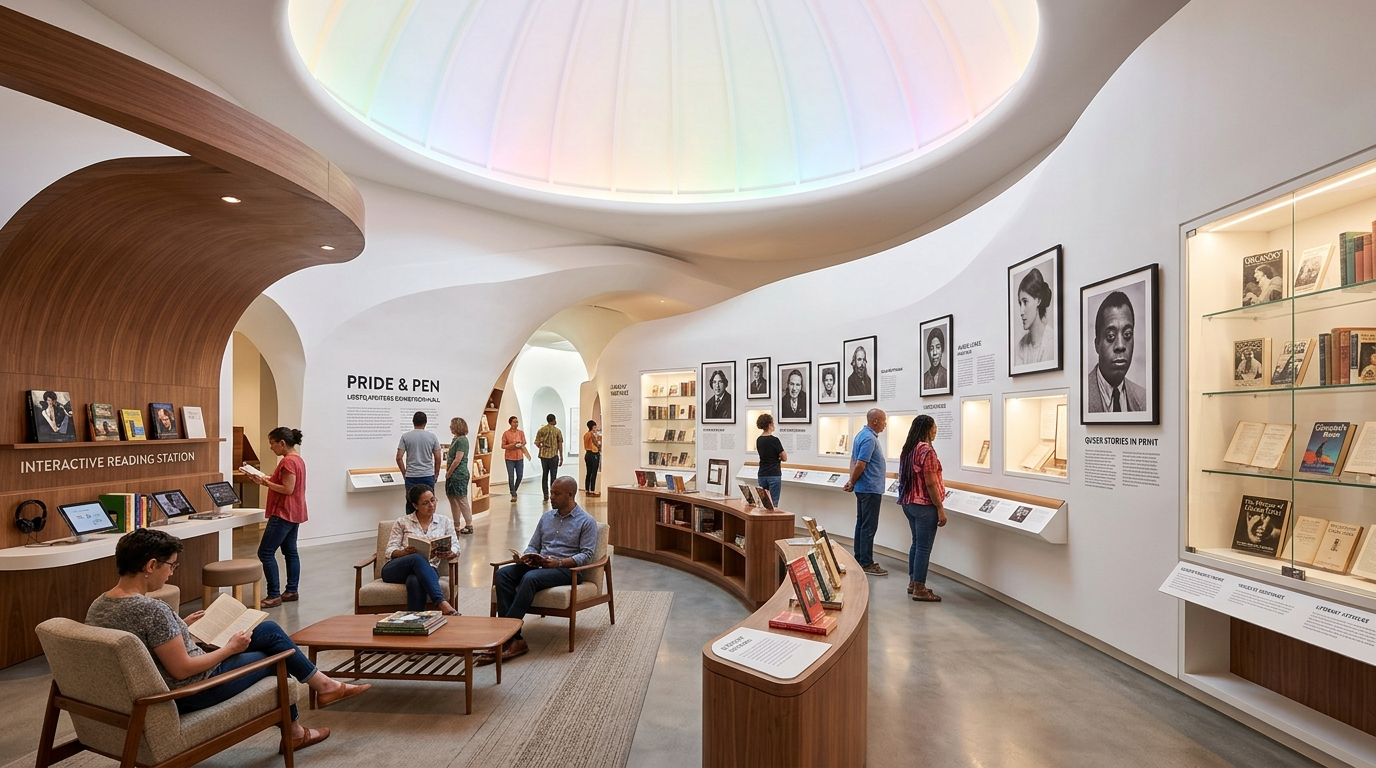
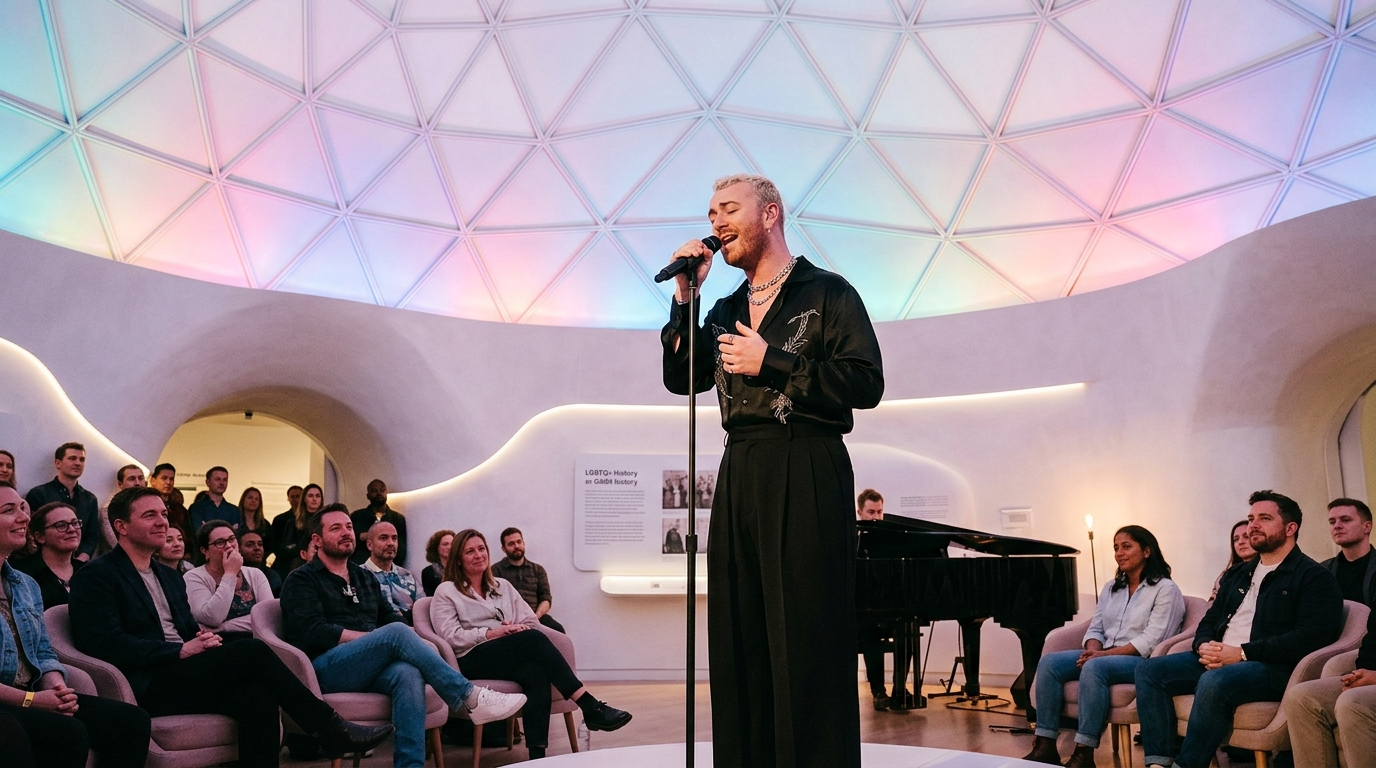
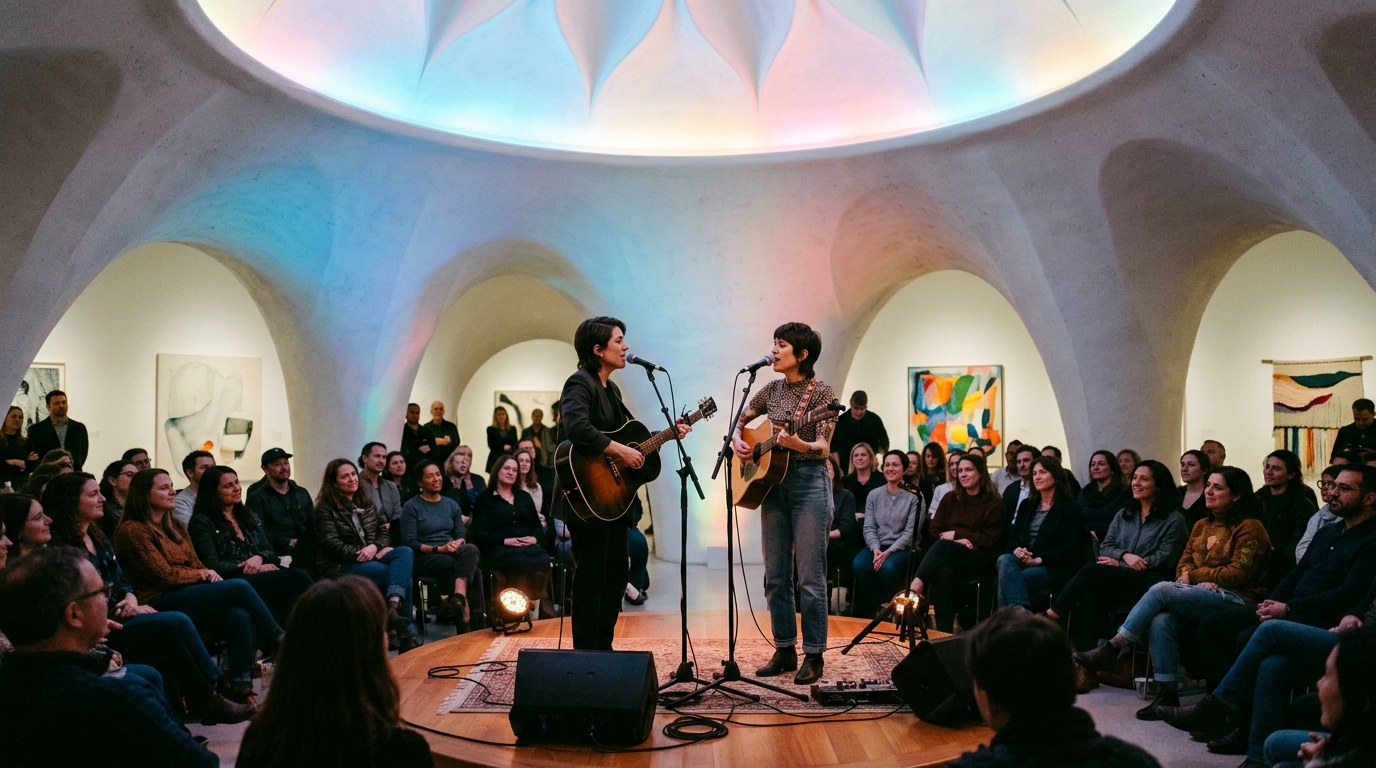
Inside, the museum balances intimate and expansive spaces. Exhibitions celebrate LGBTQ+ history, art, music, and literature, while areas for concerts, talks, and community gatherings ensure the museum is not only a repository of memory but a living, active cultural space. Circulation and spatial relationships are designed to encourage reflection, connection, and shared experience.
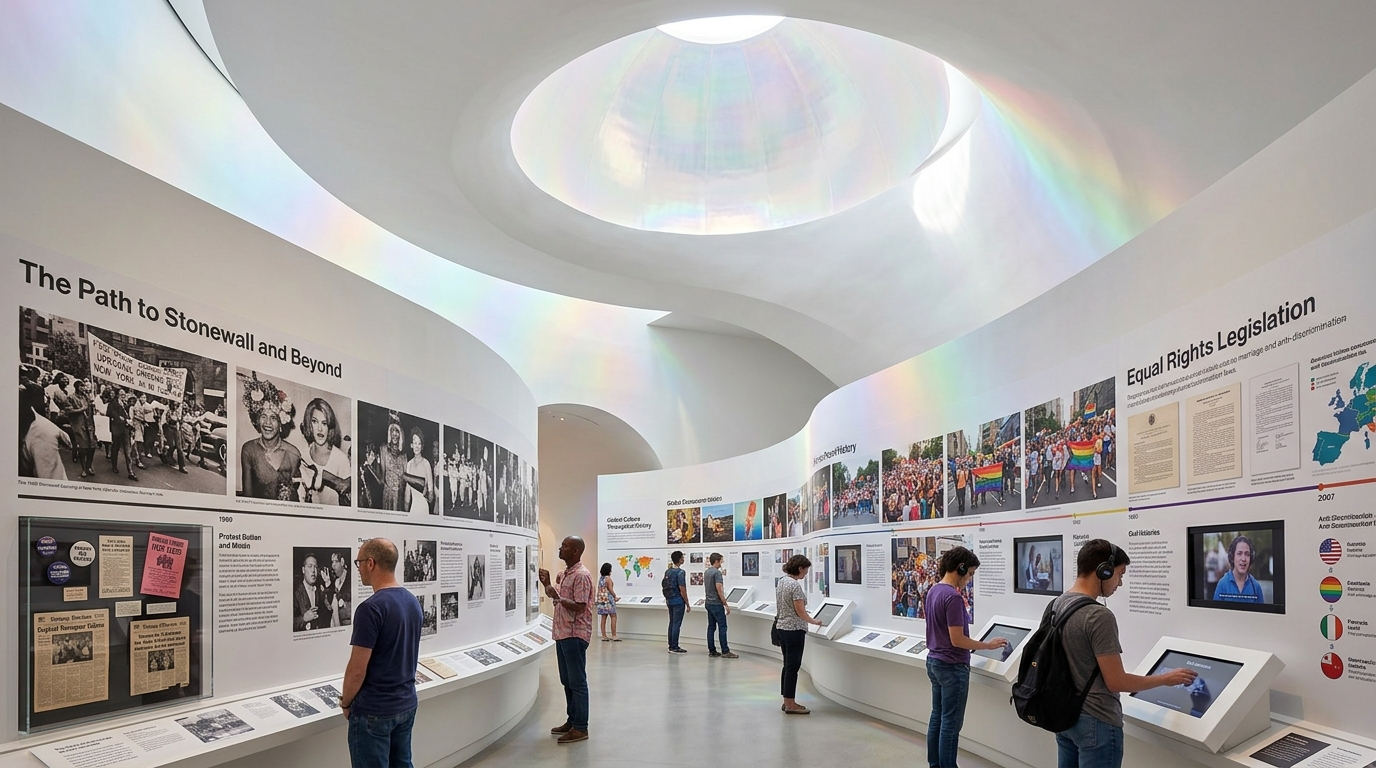
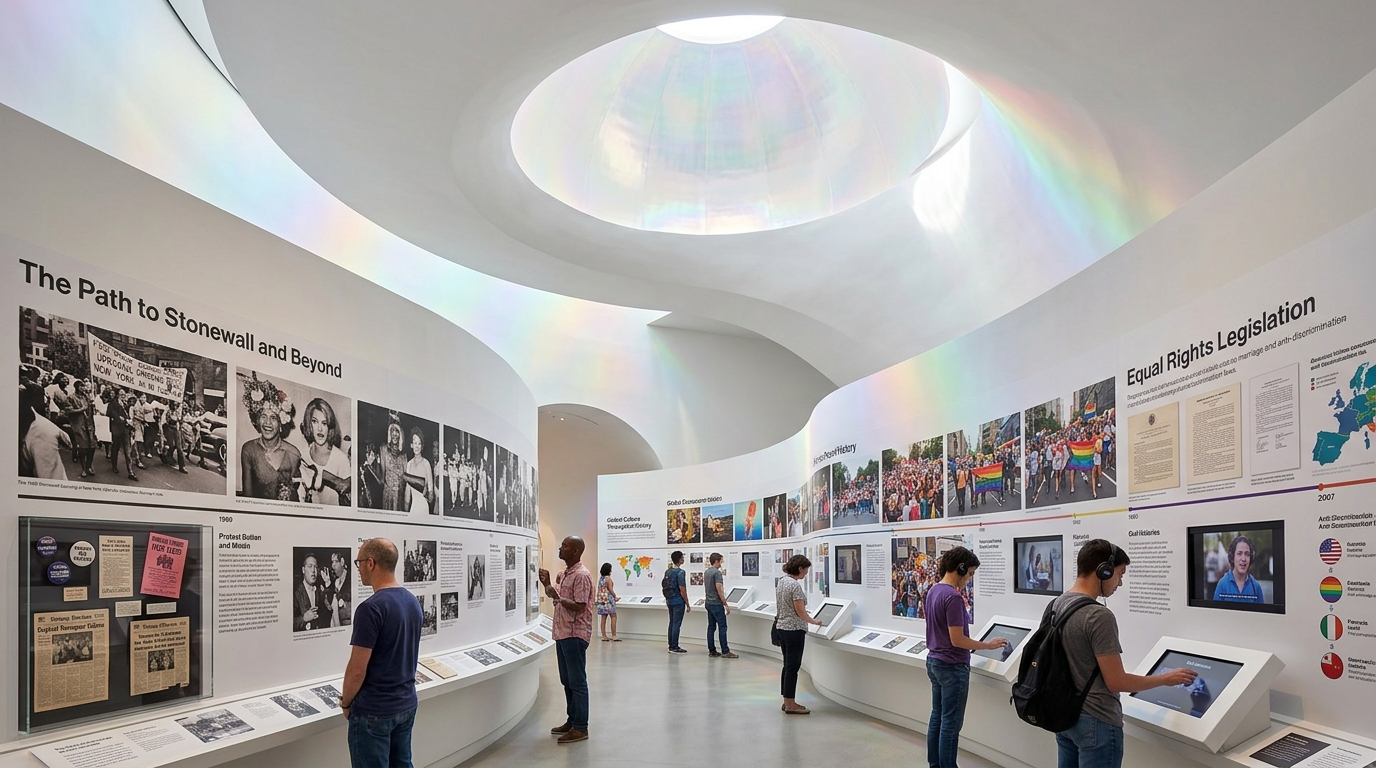
People viewing exhibits and multimedia displays on the history of civil rights and legislation at a museum exhibit.
Museum visitors viewing an exhibit about civil rights on white curved walls with historical photographs, documents, and digital screens, illuminated by a circular skylight with rainbow light refractions.
An art gallery with arched ceilings displaying pop art, including Andy Warhol portraits of celebrities and a collection of artwork on the walls, with visitors observing pieces.
People viewing artwork and sculptures in a modern art museum gallery with a high, curved ceiling and a skylight.
People visiting the Icons of Pride LGBTQ+ pop exhibition with displays of costumes, large photos on the walls, and colorful lighting.
People exploring exhibits in a music museum with display cases, photographs, vinyl records, and a black grand piano. An illuminated glass dome ceiling provides natural lighting.
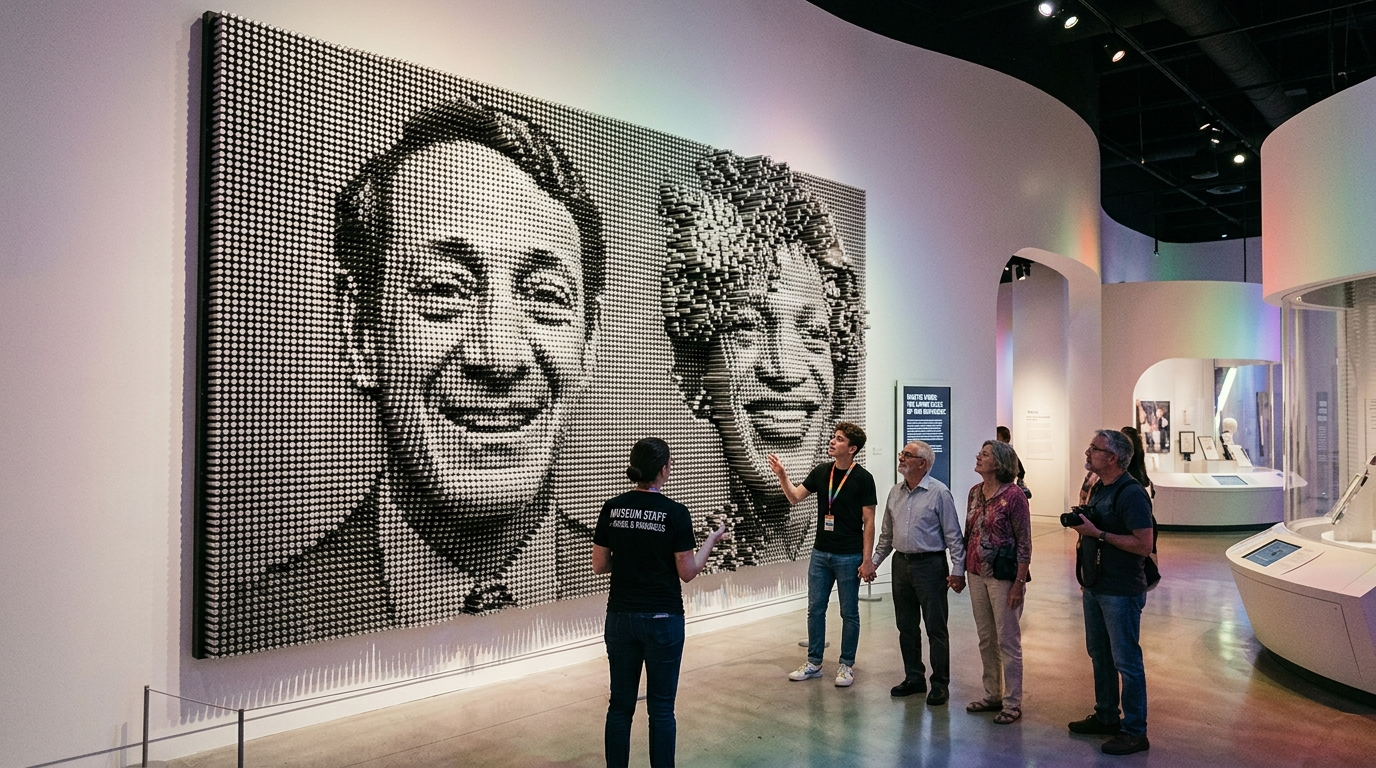
A group of visitors at a museum exhibit featuring a large mosaic portrait of two women, made of small circular tiles or objects, with museum staff explaining the artwork.
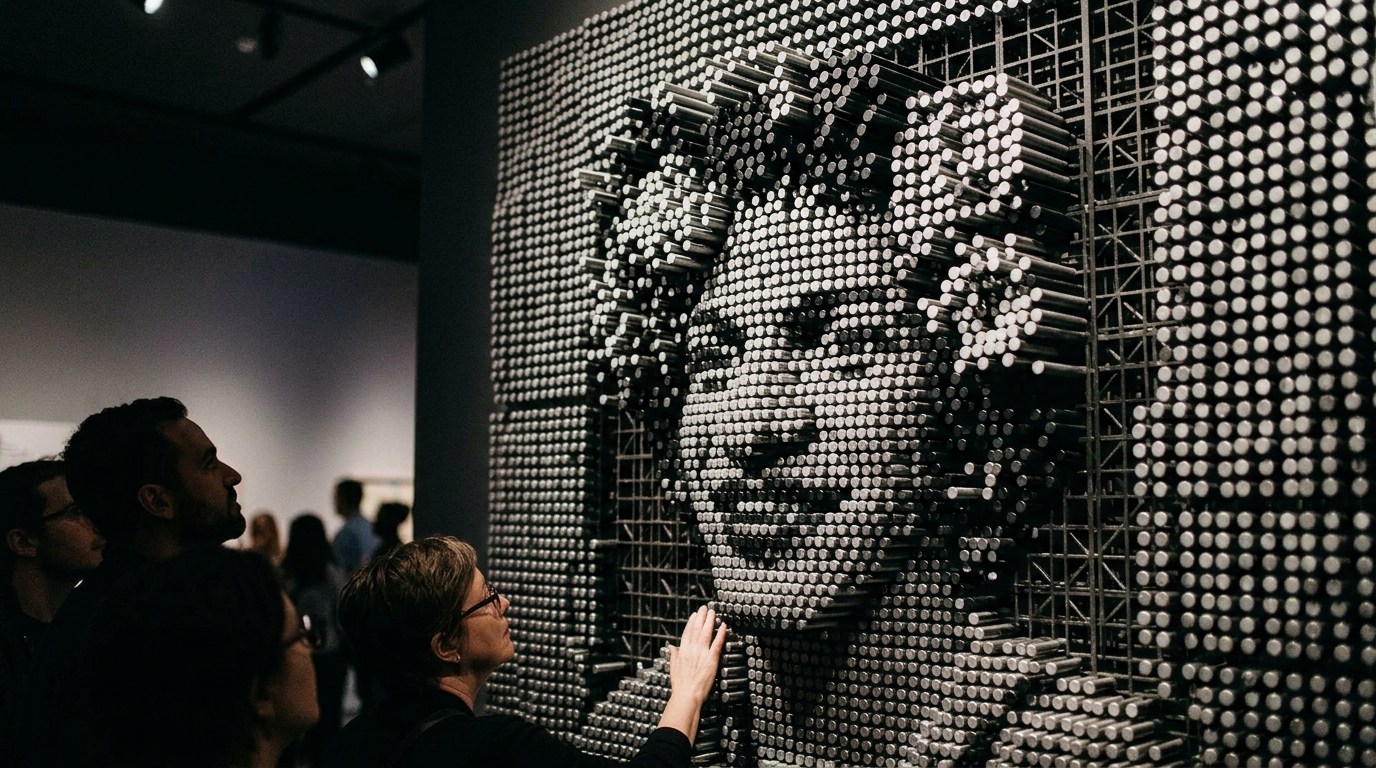
People observing a large pixelated art installation of a smiling woman's face in a gallery.
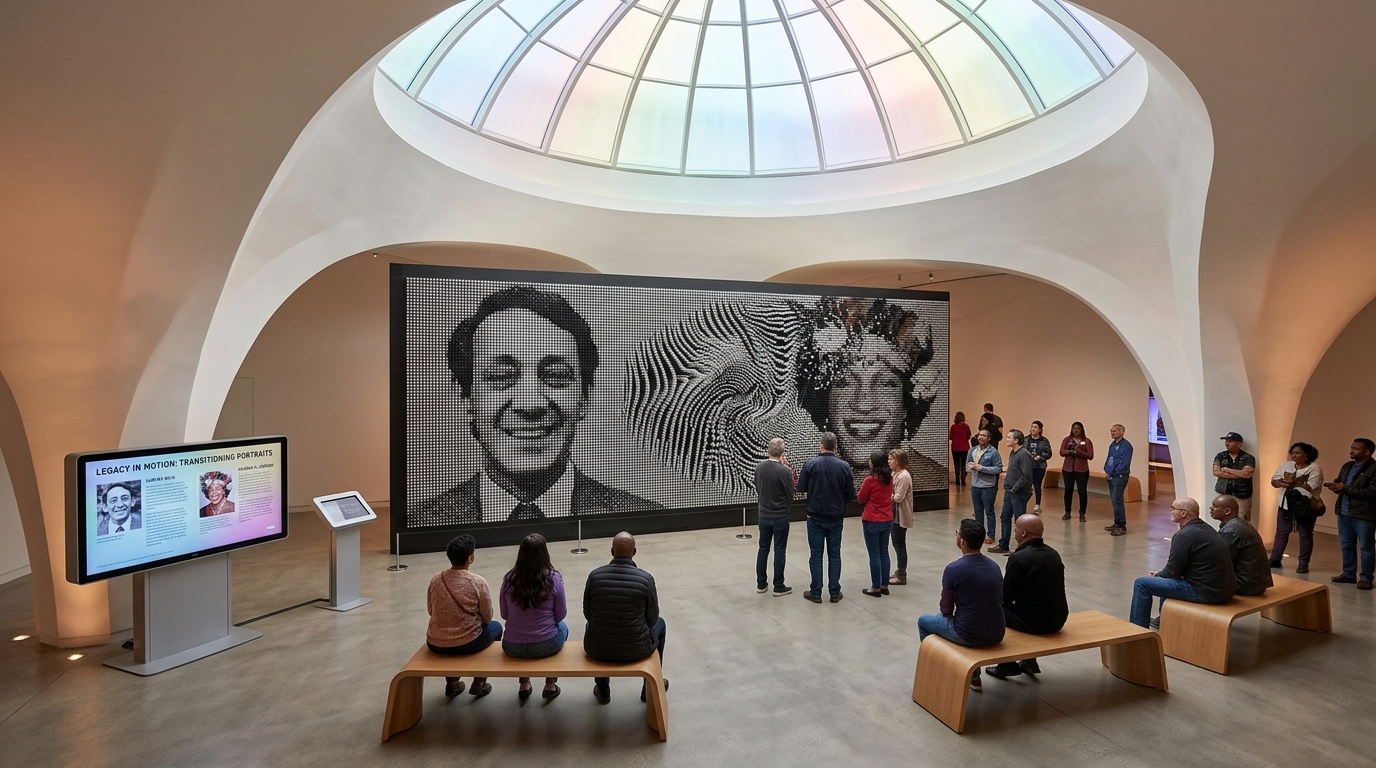
People viewing an art installation featuring large pixelated portraits of two smiling individuals in a modern, well-lit museum or gallery space.
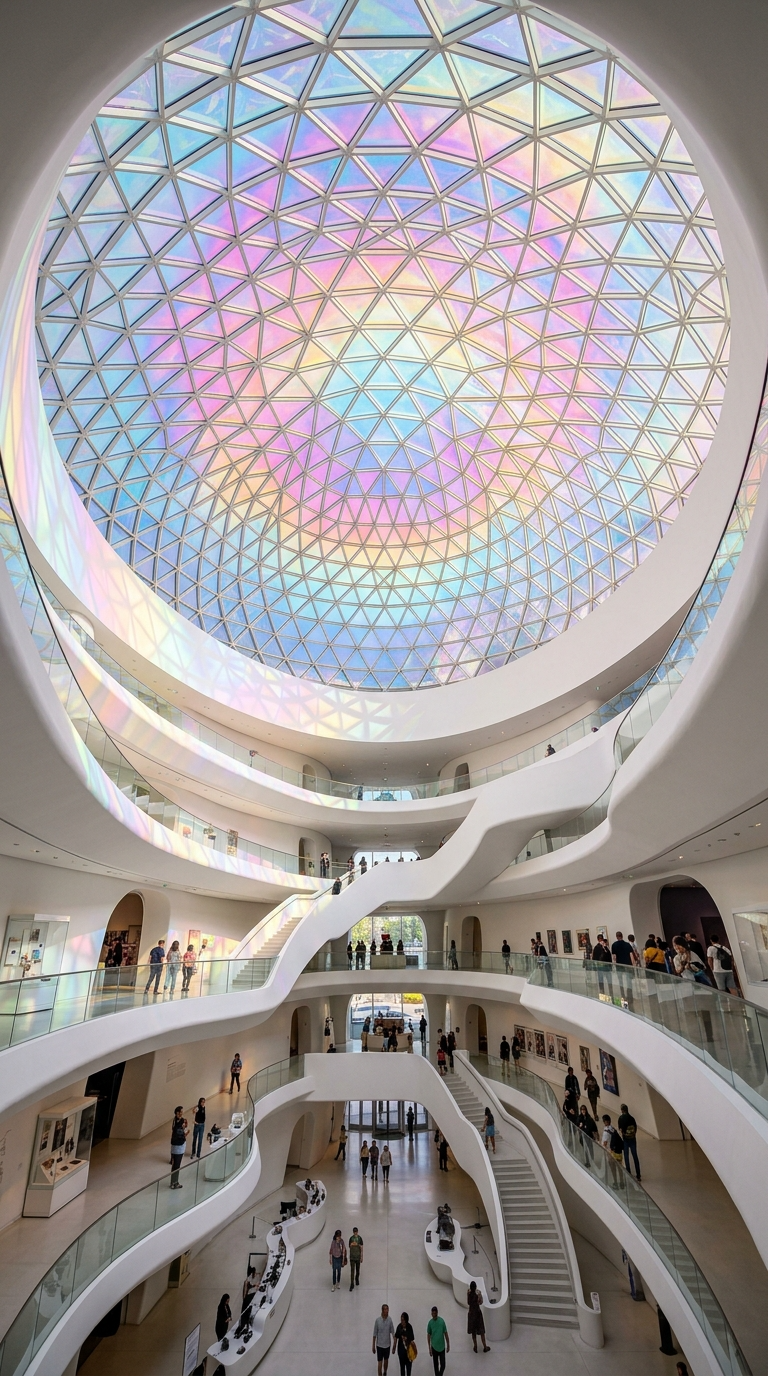
Modern art museum interior with a large glass dome ceiling displaying colorful iridescent patterns, multiple curved walkways, and visitors exploring the space.
A modern, well-lit community space with colorful seating, a rainbow pride flag, and bookshelves labeled 'LGBTQ+ Resource Library'. There are several people engaging in reading, chatting, and walking, with quotes on the wall including 'You Belong Here', 'Be Yourself, Authenticity', and 'Pride & Resilience'.
Visitors in an art museum viewing sculptures and colorful abstract artworks display modern sculptures and paintings in a bright, spacious gallery with a rainbow-colored ceiling.
People exploring and reading exhibits in a modern, well-lit library or museum with books on display and portrait photographs on the walls.

Outdoor Spaces & Garden

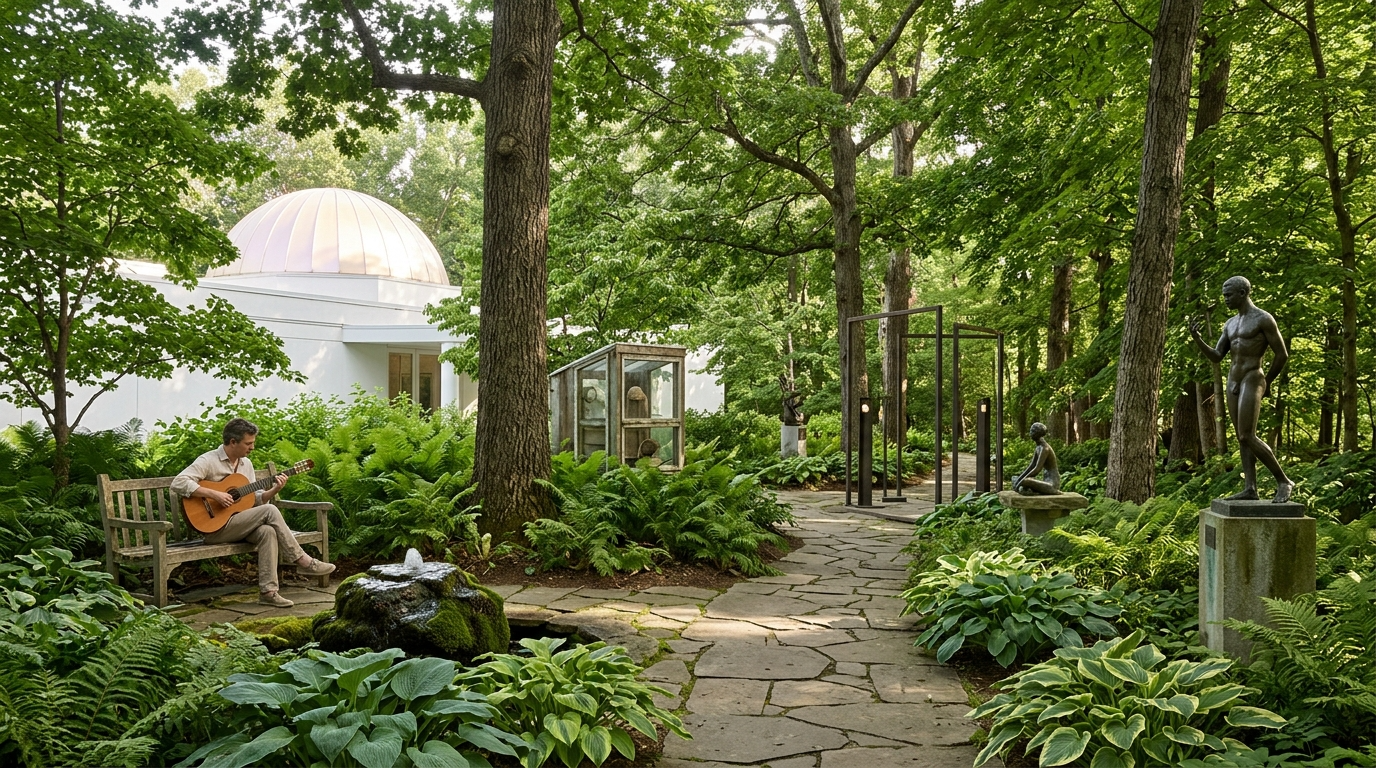
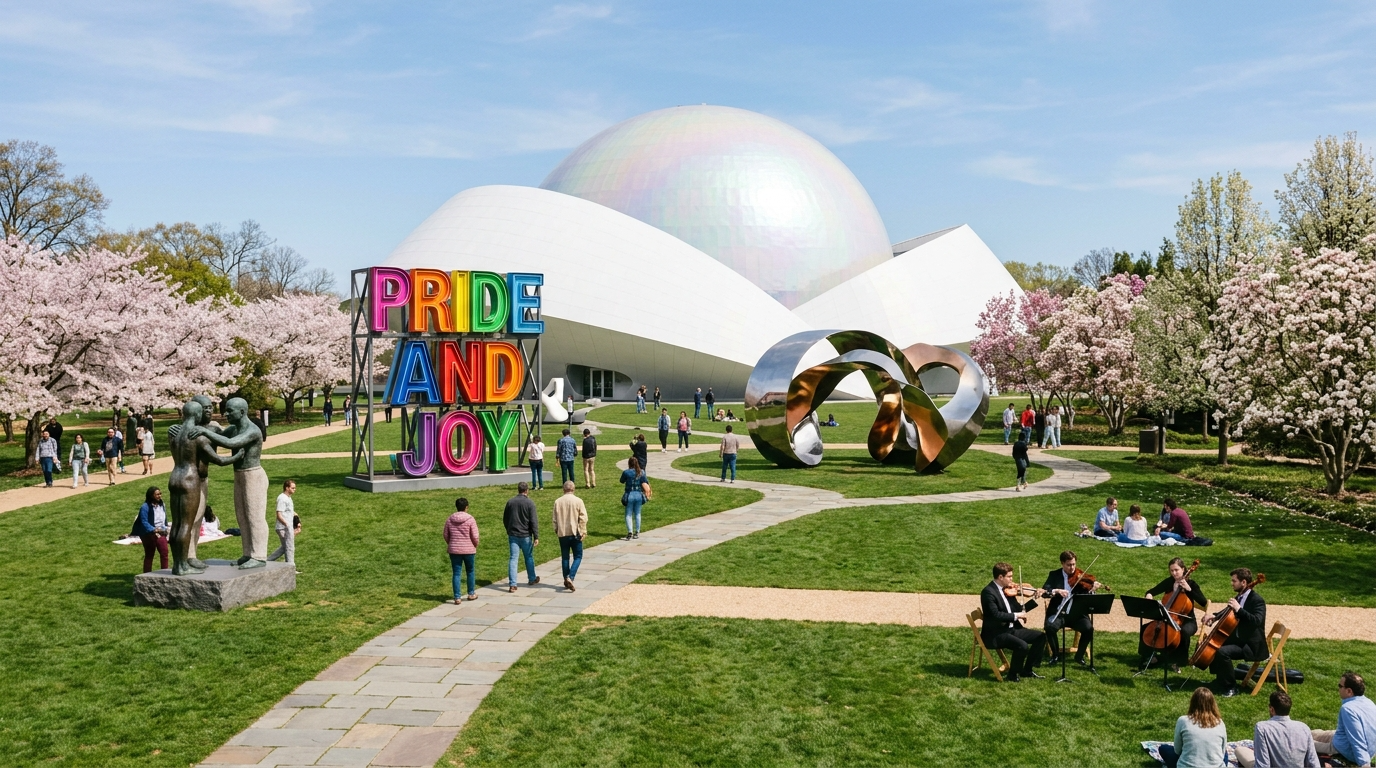
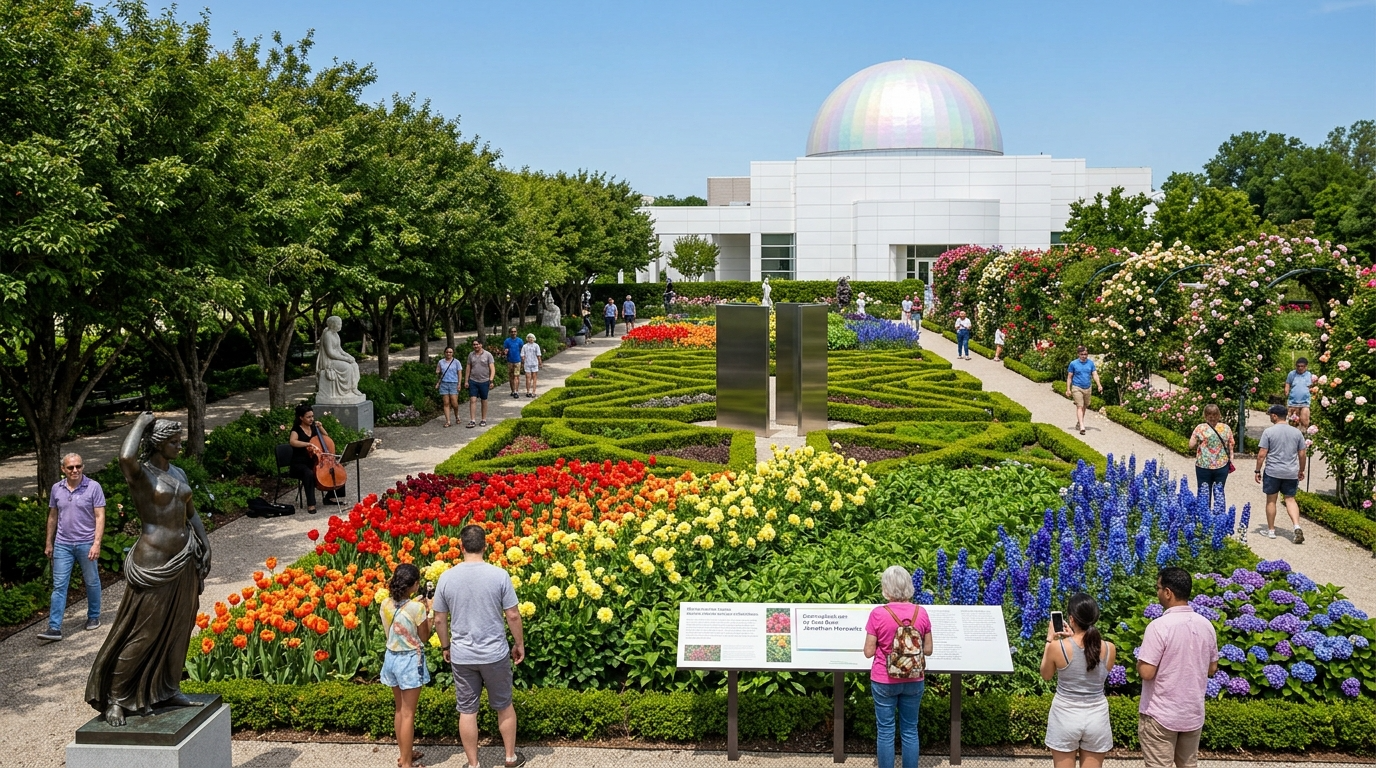
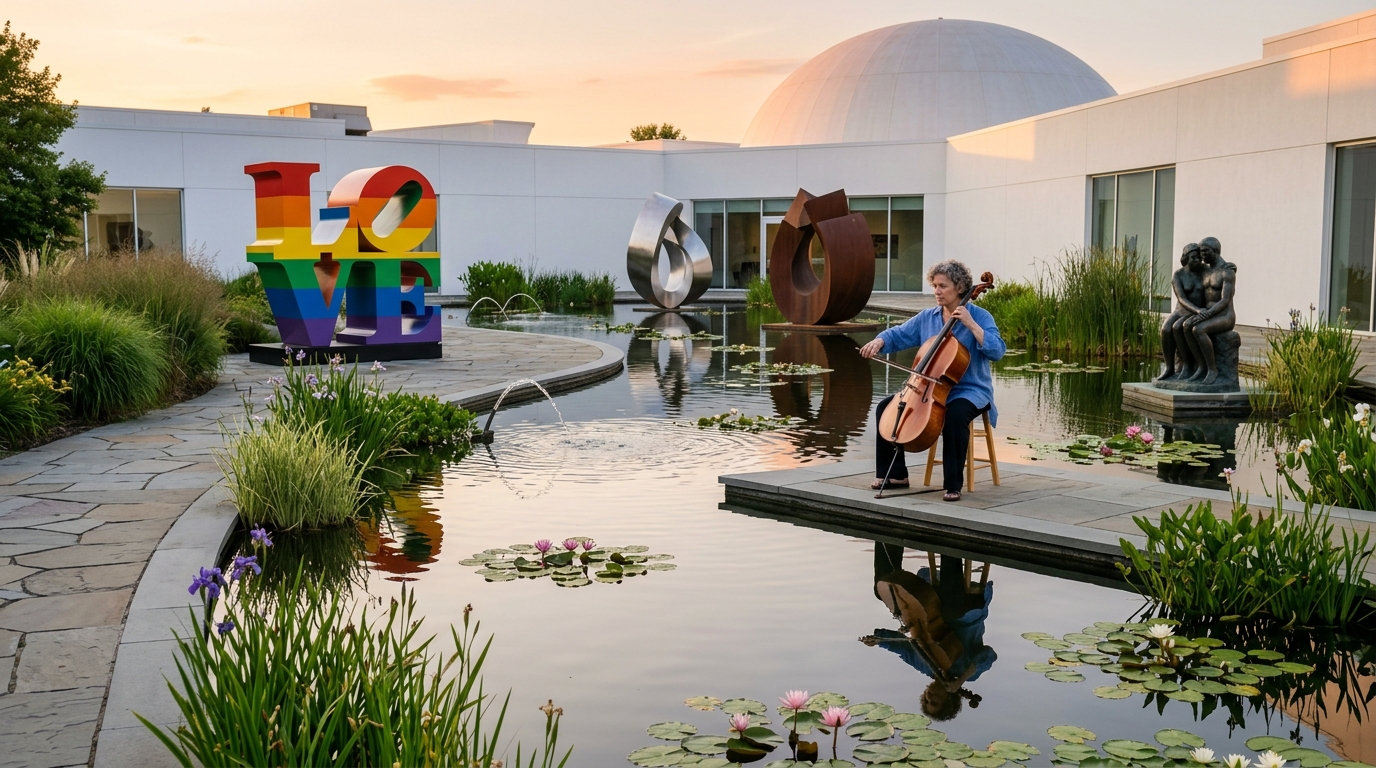
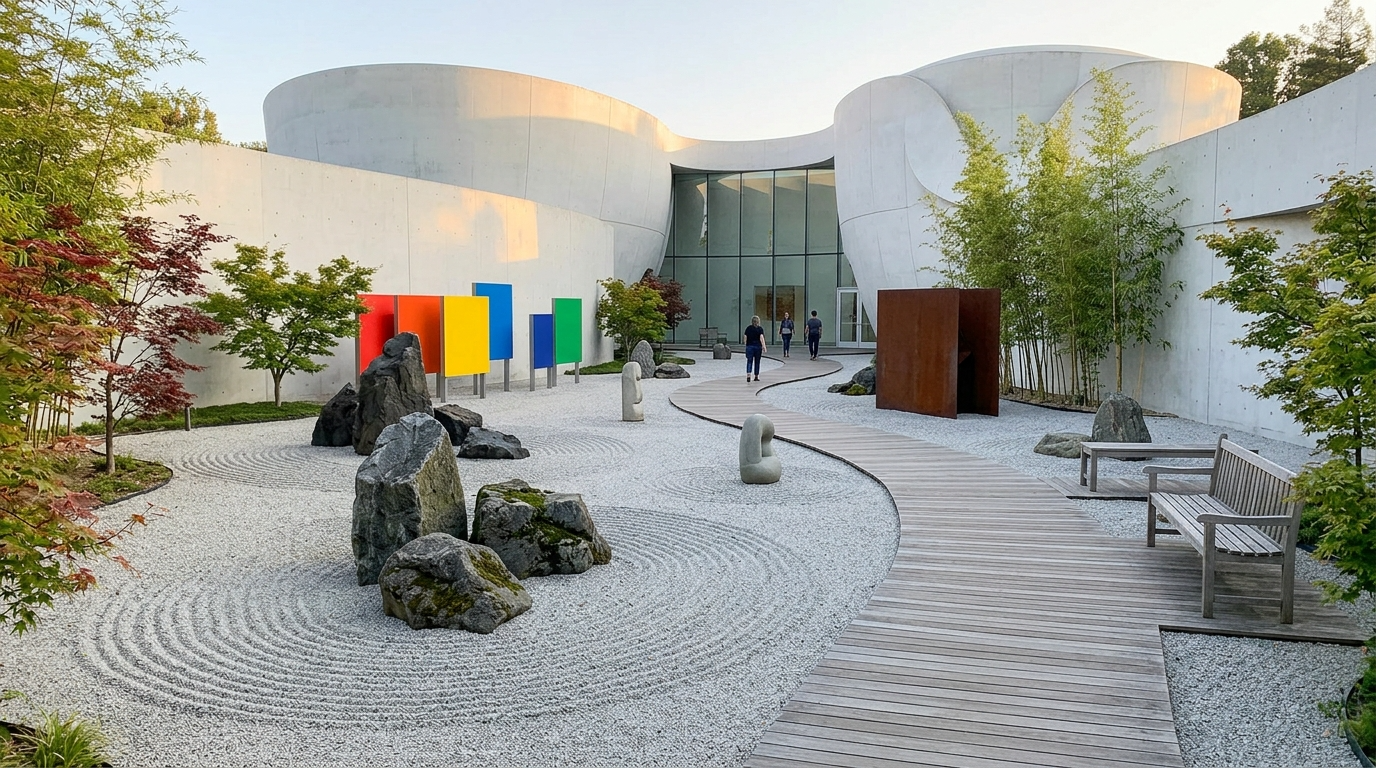
The museum’s outdoor spaces and gardens extend the architectural experience into nature, offering visitors moments of serenity and reflection. Winding paths, landscaped seating areas, and thoughtfully integrated sculptures create spaces for quiet contemplation, conversation, and connection.

These gardens are also designed for social engagement—visitors can gather for meals, informal meetings, or cultural events, enjoying the outdoors as part of the museum experience. By combining nature, art, and flexible programming, the outdoor spaces foster joy, community, and a sense of belonging, making the museum not just a destination, but a vibrant, living environment.
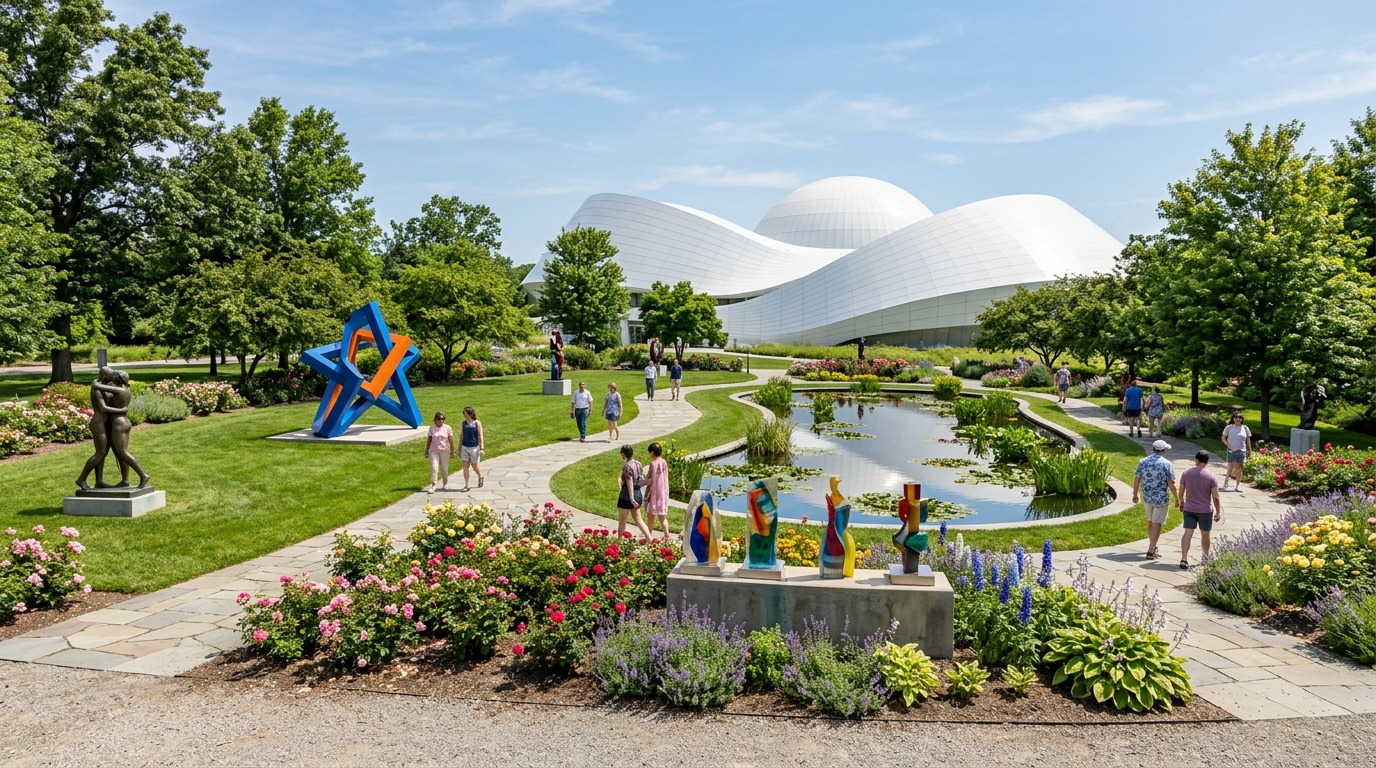
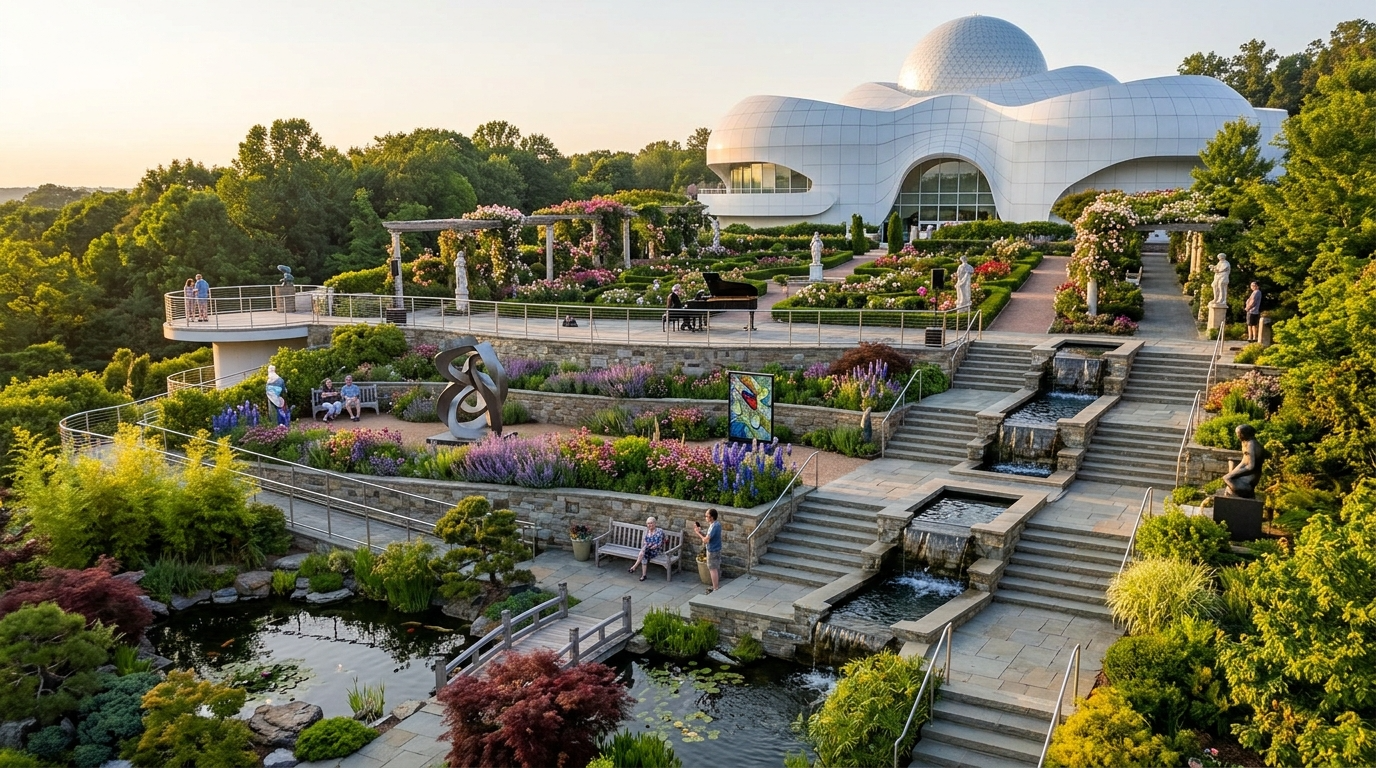
People walking around an art garden with sculptures, lush greenery, and a modern white building in the background on a sunny day.
A modern, futuristic building surrounded by well-maintained gardens, waterfalls, and statues, with visitors walking or sitting on benches, in a lush green setting with trees in the background.
A person playing guitar on a bench in a lush green garden with statues and a white dome building in the background.
People walking and sitting on the grass at an outdoor park with cherry blossom trees, a modern building, sculptures, and a large colorful sign that says "PRIDE AND JOY." A string quartet is performing, and other visitors are enjoying the day.
Colorful flower garden with statue in foreground, people walking and viewing flowers, white building with observatory dome in background.
A woman playing a cello outdoors near a pond filled with lily pads, with sculptures and a colorful Love sign in the background.
Modern building with a white curved exterior, surrounded by a Zen garden with rocks, gravel, and trees, and a wooden pathway leading to the entrance.

Public Engagement

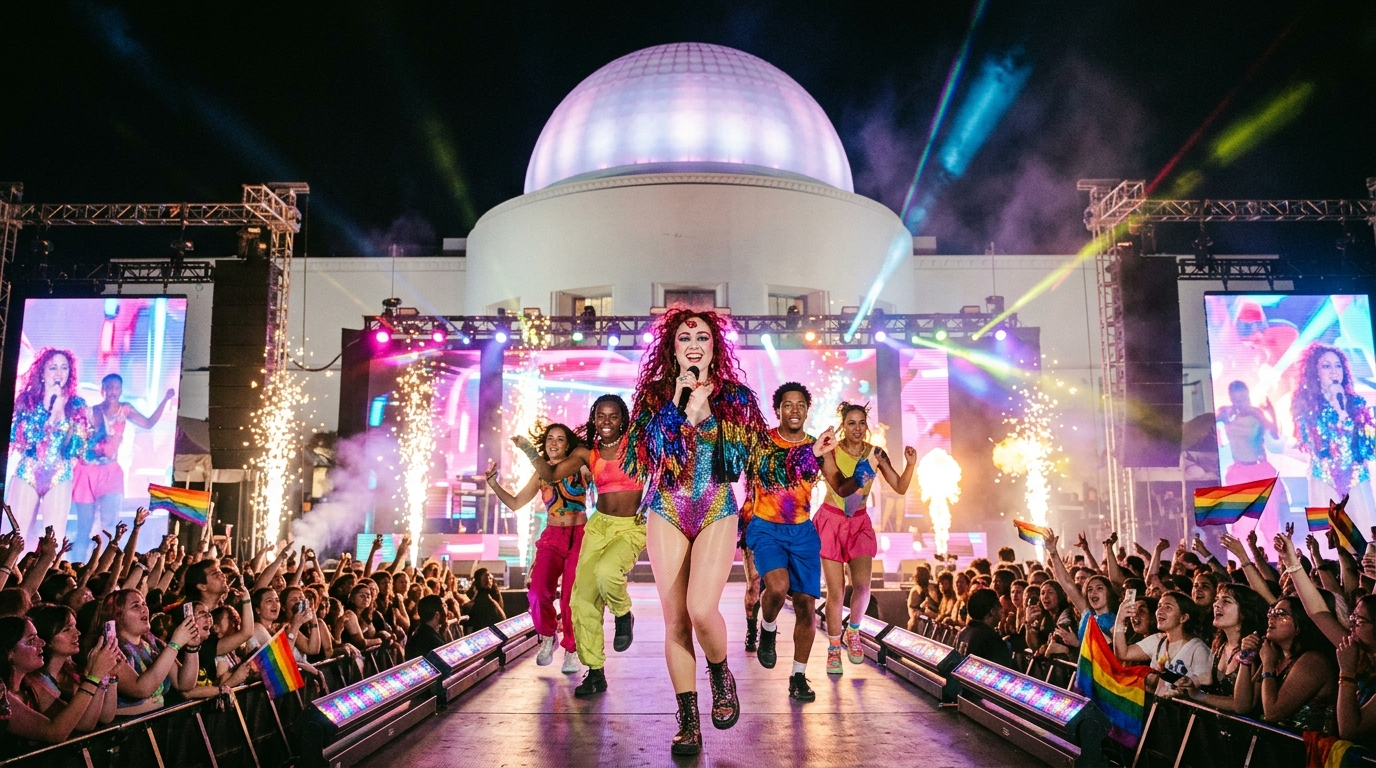
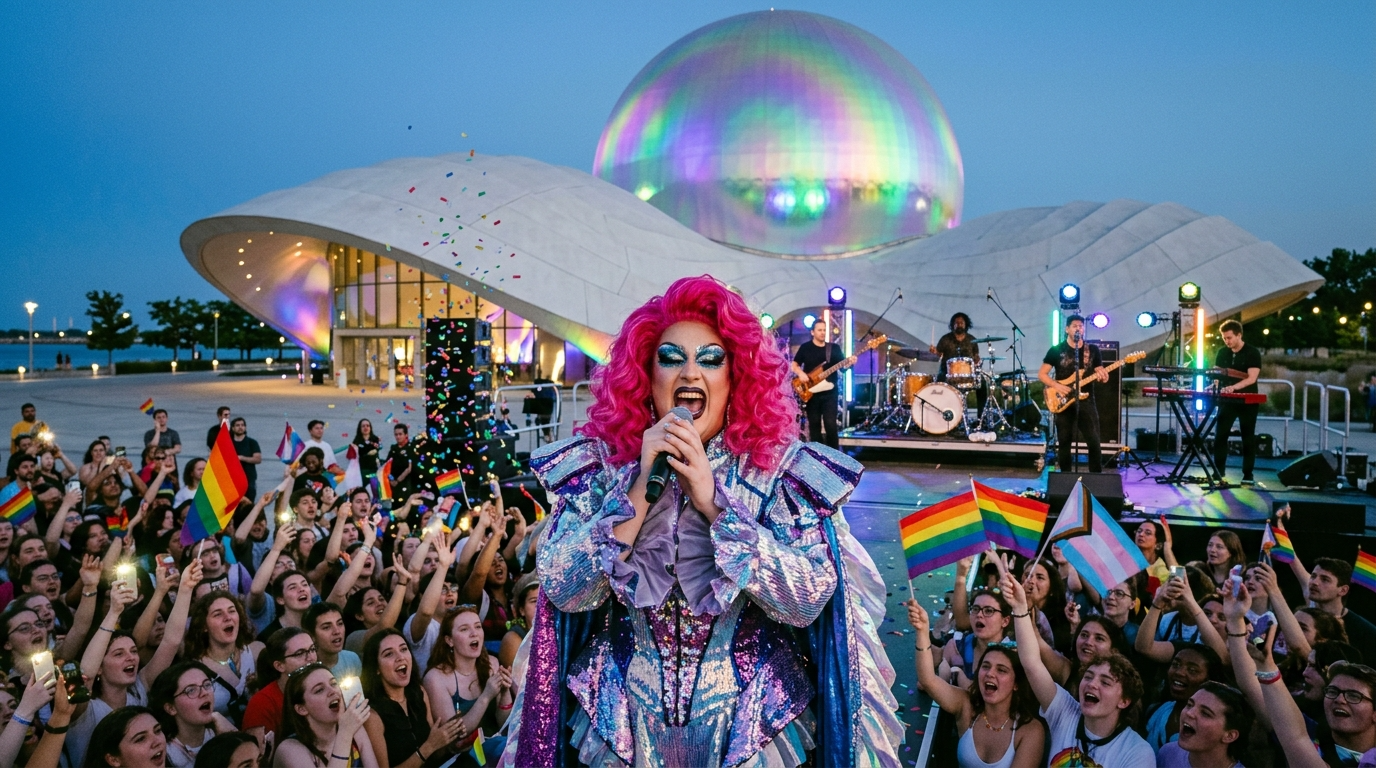
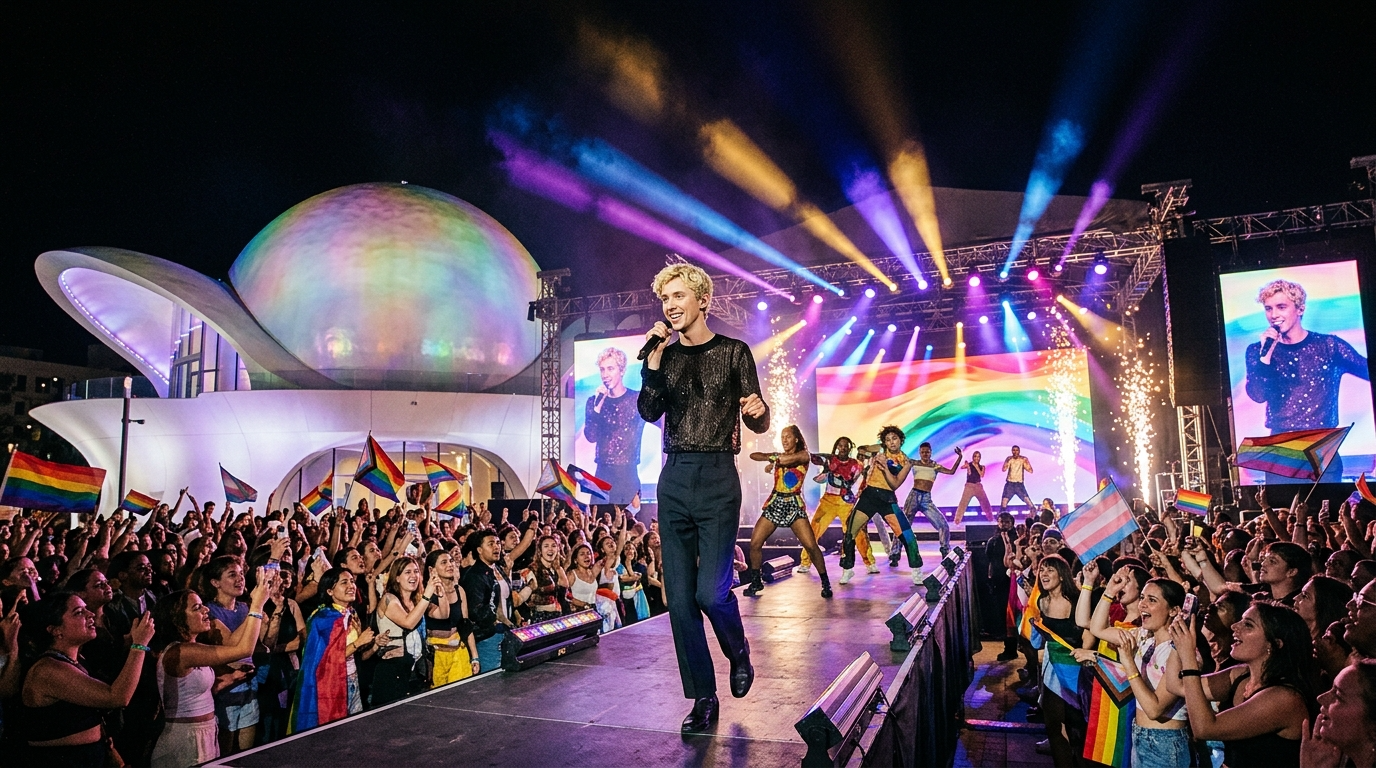
The museum extends into outdoor spaces designed for connection, celebration, and cultural exchange. Landscaped gardens and plazas host live music, performances, and art events, inviting visitors to gather, share, and experience joy together. These spaces transform with the seasons, offering flexible venues for concerts, talks, and community celebrations that foster inclusion, creativity, and a sense of belonging. By blending architecture, landscape, and programming, the museum becomes not only a place of learning but a living hub for public engagement and shared experience.
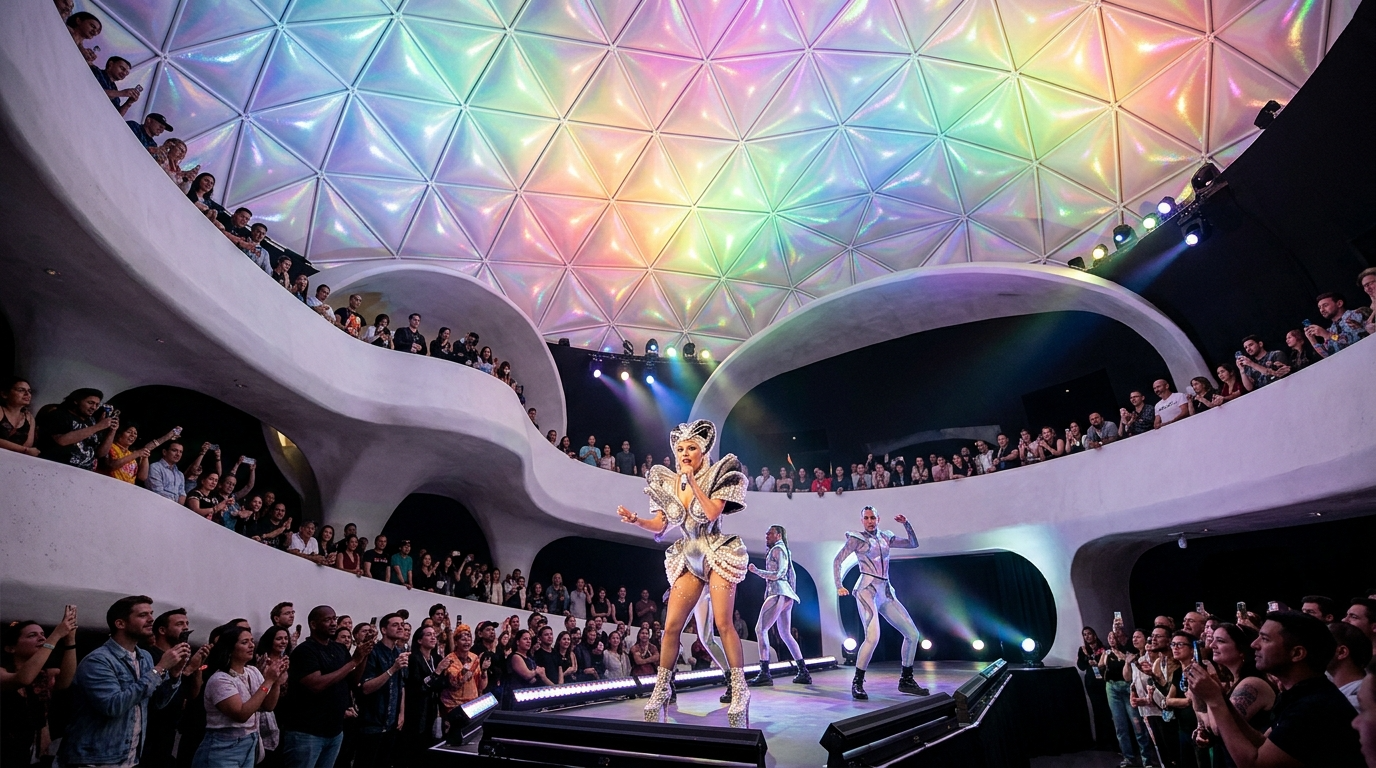
Performance on a stage at a modern theater with a colorful, geometric dome ceiling. A performer dressed in an elaborate silver costume is singing with dancers behind her, while an audience watches and photographs from balconies and ground level.
A lively outdoor Pride celebration with a male performer singing on stage, dancers performing behind him, and an audience waving rainbow flags at night with colorful stage lights and a large rainbow display.
A lively concert scene with a female performer and backup dancers on a brightly lit stage, vibrant fireworks, rainbow flags, and an enthusiastic crowd.
Performer with bright pink hair and glamorous outfit sings on stage at outdoor LGBTQ+ pride event, with rainbow flags and enthusiastic crowd.
A singer performing with a microphone on stage while an audience watches in a modern, colorful-lit venue.
Two women playing acoustic guitars and singing on a small stage inside an art gallery with colorful paintings and sculptures, surrounded by an attentive audience.

Contemporary Relevance

Relevance in 2026

Reimagined in 2026 with AI-supported visualization, the project highlights how conceptual ideas can evolve with technology while preserving their original intent. The museum remains vital today—not only as a cultural institution but as a space that fosters belonging, learning, and resilience in a world still facing social and political challenges.
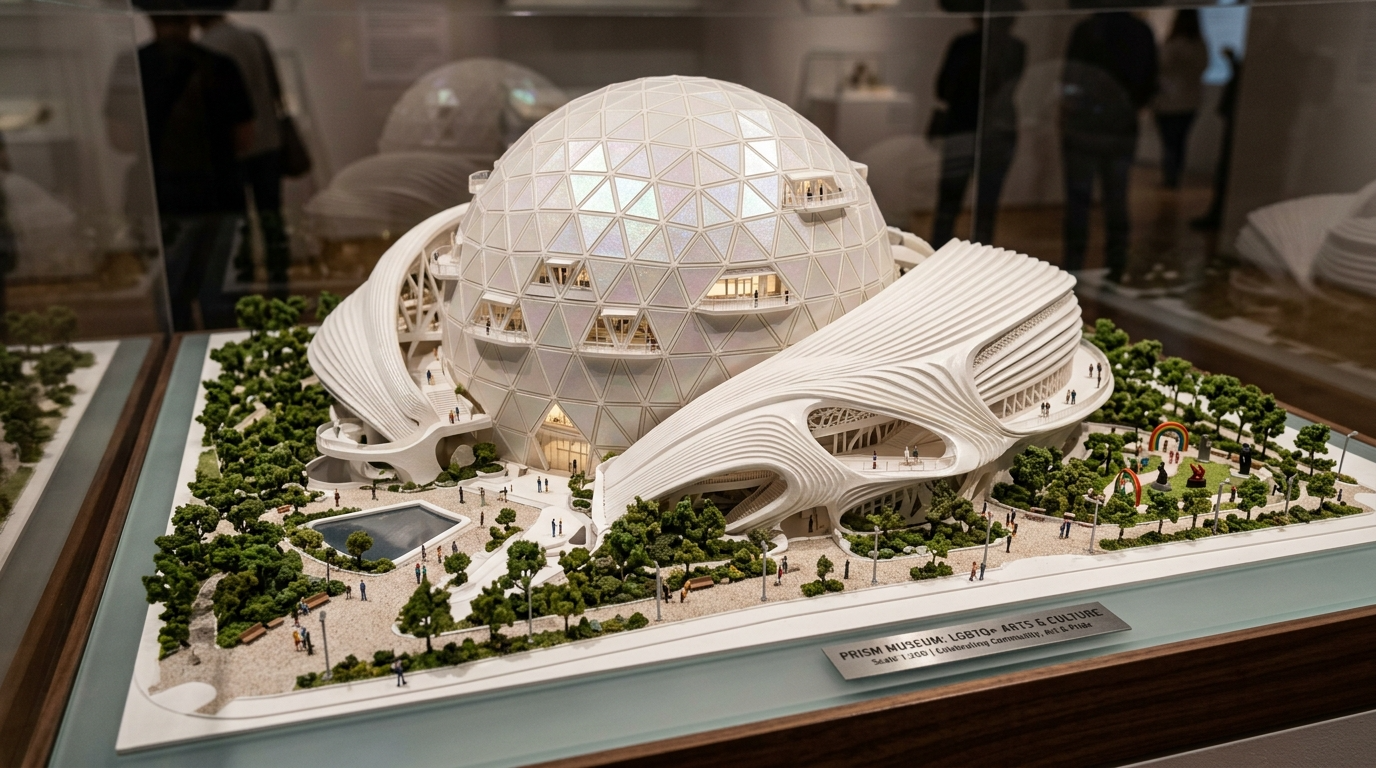
Architectural scale model of Prism Museum, a spherical building with a geodesic dome structure, surrounded by landscaped gardens with pathways, trees, and small figures of people.

Designing Resilience

Design continues to evolve alongside technology, and the rapid rise of AI introduces challenges never seen before—creatives face uncertainty, fears of obsolescence, and questions about the future of their work. Yet these very changes also open new possibilities for exploration, experimentation, and the realization of ideas in ways previously unimaginable.

Much like the LGBTQ+ community has transformed adversity into strength, this project embraces technological change as a catalyst for growth. By integrating research, conceptual thinking, and AI-supported visualization, it demonstrates how design can remain meaningful, human-centered, and resilient, creating spatial experiences that connect, inspire, and endure.
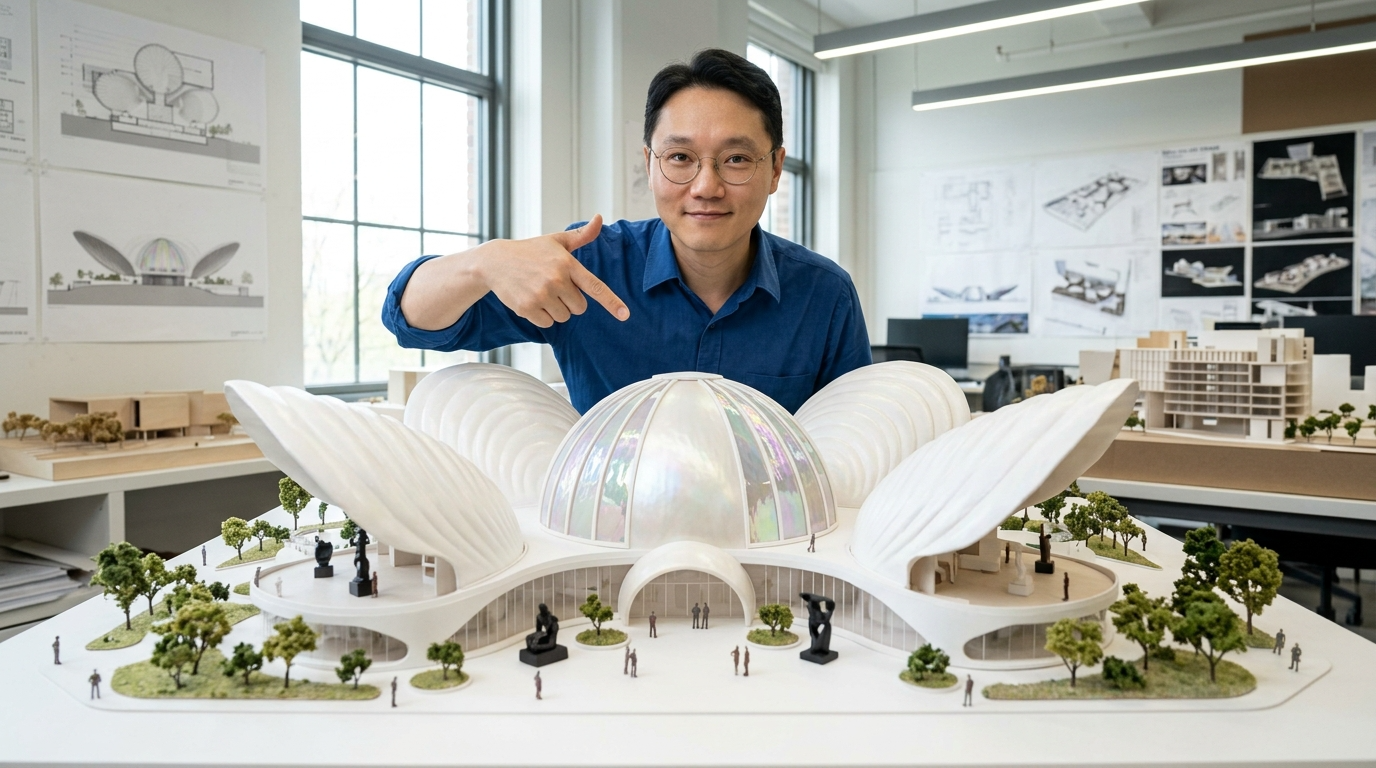
An architect in a blue shirt and glasses points to a detailed architectural scale model of a modern building with curved, shell-like structures and a central dome, set in a room with large windows, architectural drawings on the walls, and additional models and plans on tables.